what does merch mean
Merch Terms Every Creator Should Know: Drop, Blank, Colorway and More
What merch means, how it differs from swag, and the words creators, printers and fans use for products, prints and drops, explained plainly so you can read a catalog and run a launch without guessing.
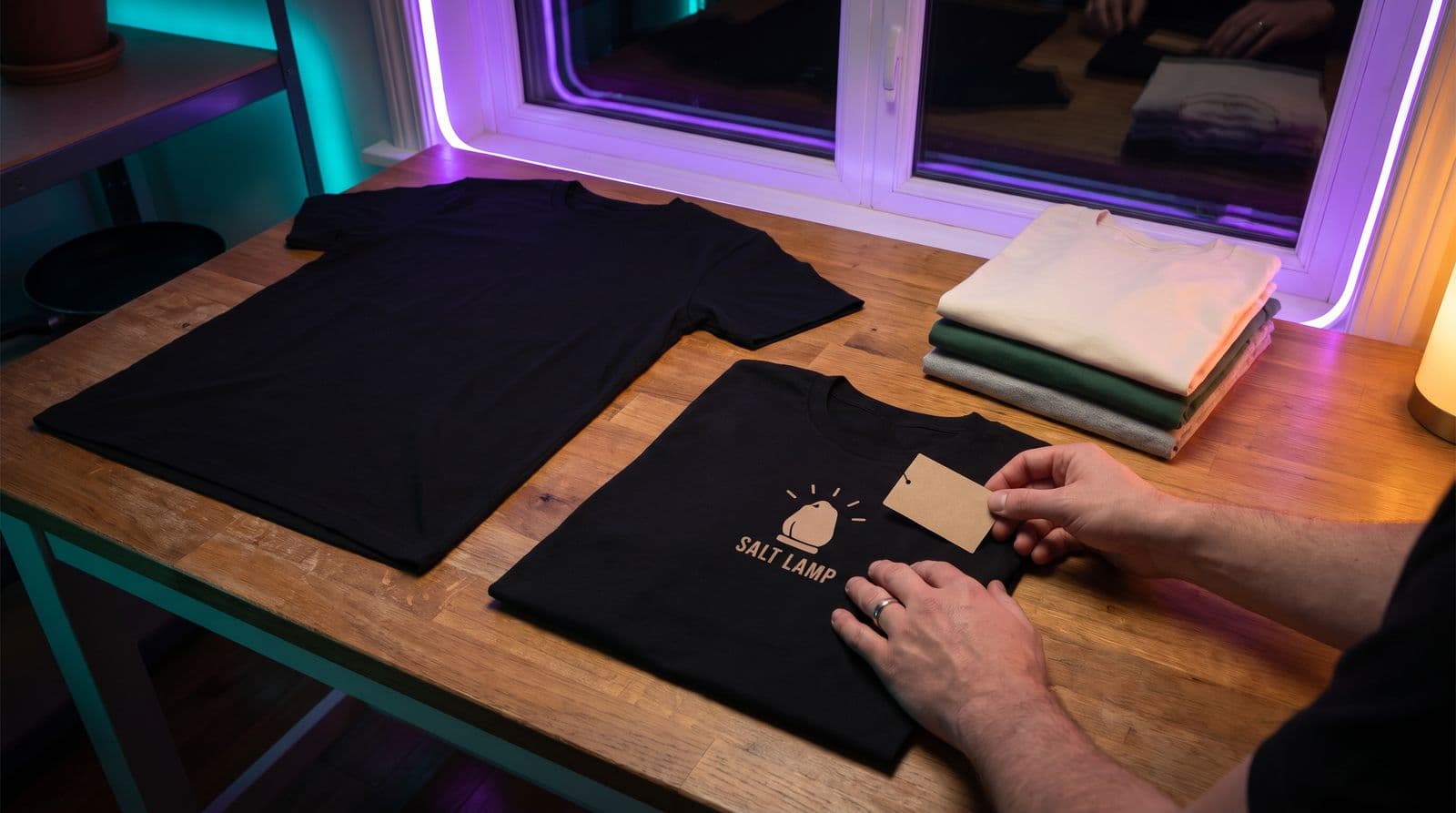
Every trade has a vocabulary, and merch has two: the words creators and fans use, and the words printers and platforms use. If you have ever stared at a product page wondering what a colorway is, whether a blank is an insult, or why your print provider is asking about placement, this is the glossary. It is organised by where you will meet each word: in the culture, on the product, at the printer, in the business, and in chat.
The Basics
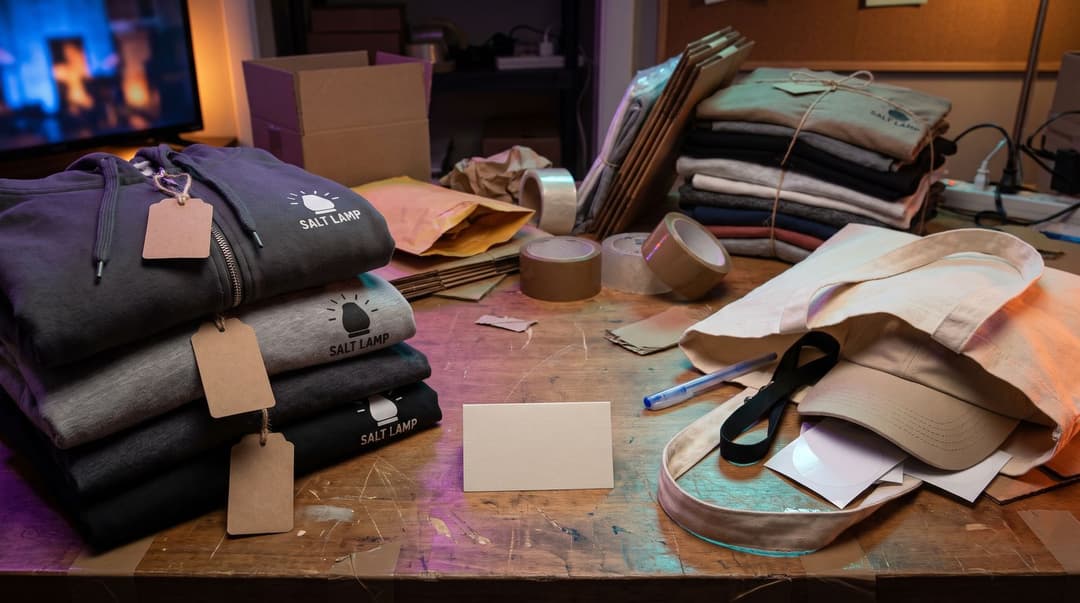
Merch. Short for merchandise: products sold carrying a brand, creator, band or show. Merriam-Webster's entry defines it simply as merchandise and dates the first known use to 1982, which is roughly when band t-shirts became a business rather than a souvenir. For creators it means the physical things fans buy to support you and be seen supporting you.
Swag. The free stuff. Merriam-Webster's entry covers promotional goods and goods given to people who attend an event, alongside the older sense of loot. The practical difference is money: merch is sold, swag is handed out. Sponsors give swag; you sell merch.
Drop. A merch release at an announced time, often with a limited window or limited quantity. Our guide to launching your first drop covers the mechanics.
Restock. Bringing back a product that sold out or was retired. A restock of a limited drop is a decision, not a default; fans who bought the first run notice.
Run. The quantity of a product made or offered. A limited run has a stated number; a numbered run tells each buyer which of them they got. Print on demand has no run, which is why "limited" there means a time window rather than a quantity.
Evergreen. The opposite of a drop: products that are always in the store. Most creator stores end up with an evergreen core and occasional drops on top.
Pre-order. Taking orders before the product is made, which is how campaign platforms and batch printing work. The buyer waits; you carry no stock.
Sold out versus retired. Sold out means the run is gone and may come back. Retired, archived or vaulted means it will not. Say which, because fans ask.
On the Product
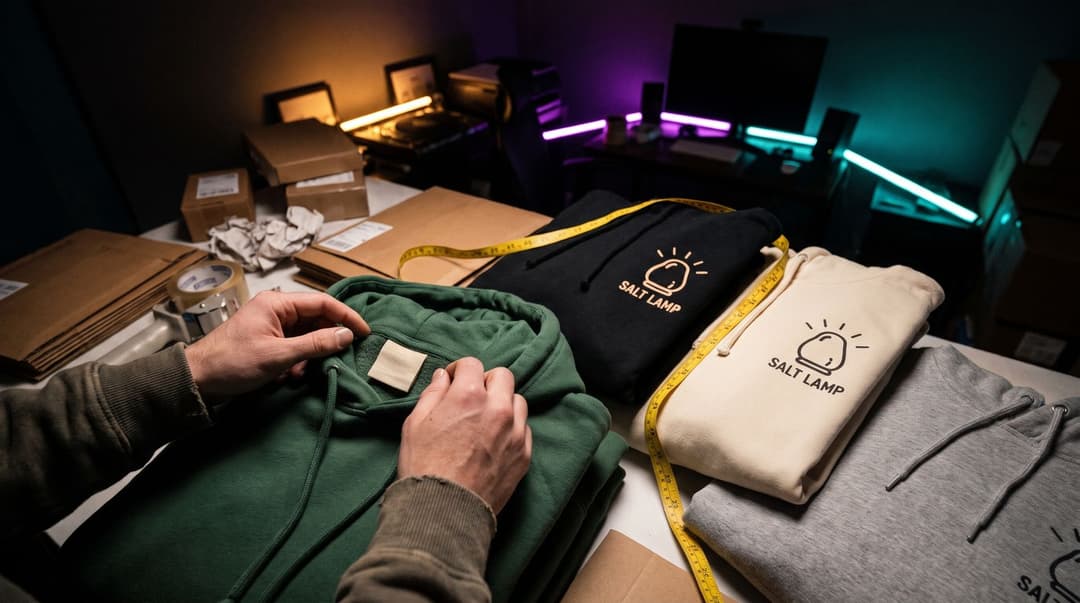
Blank. The plain, unprinted garment or item before your design goes on it: the tee, the hoodie, the mug. Blanks are made by apparel brands, not by printers; "a Gildan 5000" or "a Bella+Canvas 3001" is a blank, and the number is the manufacturer's style code. Choosing the blank is most of choosing the product.
Colorway. One colour option of a product, including any contrast parts: black with white drawstrings is one colorway, heather grey another. Catalogs list a style once and its colorways under it.
Cut. The shape of the garment: unisex, fitted, relaxed, boxy, oversized, cropped. Unisex is the default blank; fitted and cropped are usually separate styles with their own codes.
Weight. How heavy the fabric is, given in grams per square metre or ounces per square yard. Heavier fabric feels more premium and costs more; a heavyweight tee and a lightweight tee can be the same cut. Weight matters more for hoodies than for anything else you will sell.
Fleece. The brushed, insulating fabric of hoodies and sweatshirts. "Fleece" on a catalog means sweatshirt-type items, not the outdoor jacket.
Garment-dyed. A blank dyed after it was sewn rather than before, giving a softer, slightly faded, vintage look with more variation between pieces. Comfort Colors is the blank most people mean.
Neck label, tag, tagless. The label inside the collar. Tagless means it is printed on the fabric rather than sewn in; custom labels replace the blank's brand with yours, which is what "white label" means on apparel.
Placement. Where the print goes: front, back, left chest, sleeve, pocket, hem. Each placement has its own print area and often its own price.
Print area. The maximum size of the printed design at a given placement. A front print area is a rectangle; your design has to fit inside it and look right when it does.
At the Printer
Print on demand. Making an item only after it is ordered, one at a time. No stock, no minimums, higher cost per unit than a bulk run. It is the model behind most creator merch, and the reason you can run a store with nothing in your garage.
Print provider. The company that physically prints and ships. On a marketplace of printers, you choose or are routed to one; Printify's glossary entry describes the role as the vendor responsible for printing, packing and delivering on the deadline. On an integrated service, the service is the provider.
Fulfilment. Everything between the order arriving and the parcel leaving: printing, quality check, packing, shipping. "Fulfilment time" is production time, before the carrier has it.
DTG. Direct-to-garment printing, where ink is sprayed into the fabric by a machine that works like an inkjet printer. Good for full-colour designs and one-off orders. Printful's DTG page describes the ink soaking into the fibres rather than sitting on top, which is why DTG feels soft and why it suits cotton better than polyester.
DTF. Direct-to-film: the design is printed on a film and heat-pressed on. Brighter on dark and synthetic fabrics than DTG, slightly more of a surface feel.
Screen print. Ink pushed through a stencil, one colour per screen. The classic band-tee method: cheap per unit in quantity, expensive for one, best for simple designs with few colours. Campaign and batch platforms use it when a run is big enough.
Embroidery. Stitched, not printed. Premium feel, limited colours and detail, priced by stitch count. The left-chest logo and the hat are its home. Enamel pins are the other "made, not printed" category.
All-over print and sublimation. Dye bonded into polyester fabric so the design can cover the whole garment, seams included. Polyester only; cotton will not take it.
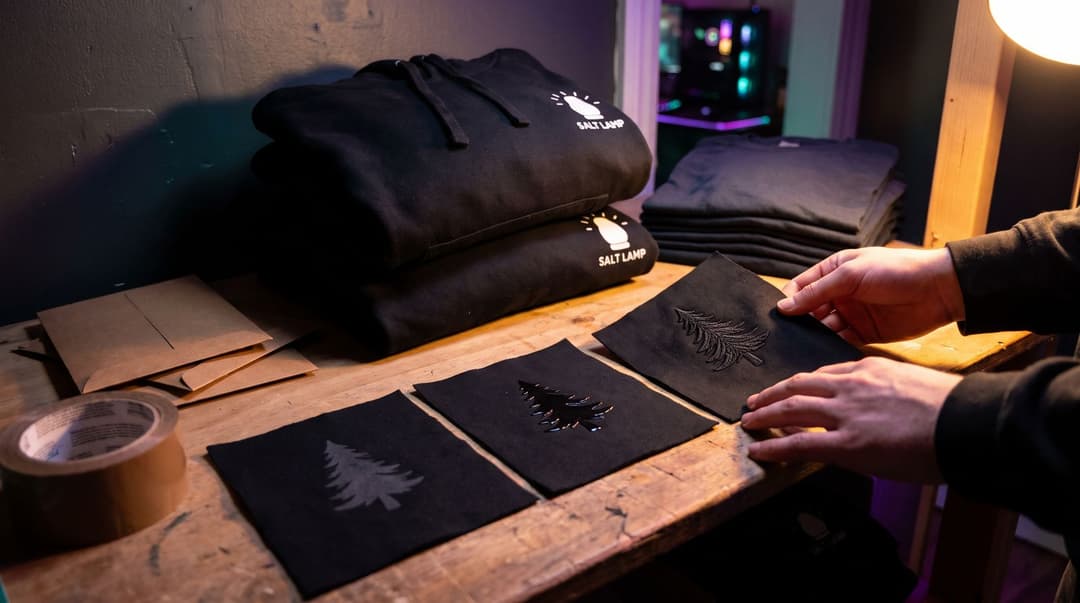
Puff print. A raised, foam-like print. Trendy on hoodies, worth a sample first.
Print file. The artwork you upload: usually a PNG with a transparent background at the printer's stated pixel size and 300 DPI. Our design guide covers getting it right.
Mockup. A rendered image of your design on the product, used in the store before any physical item exists. A render is fine for a store listing; a real photo is better once you have a sample.
Sample. One real unit ordered to check the blank, the print and the colour before you sell it. Always.
In the Business
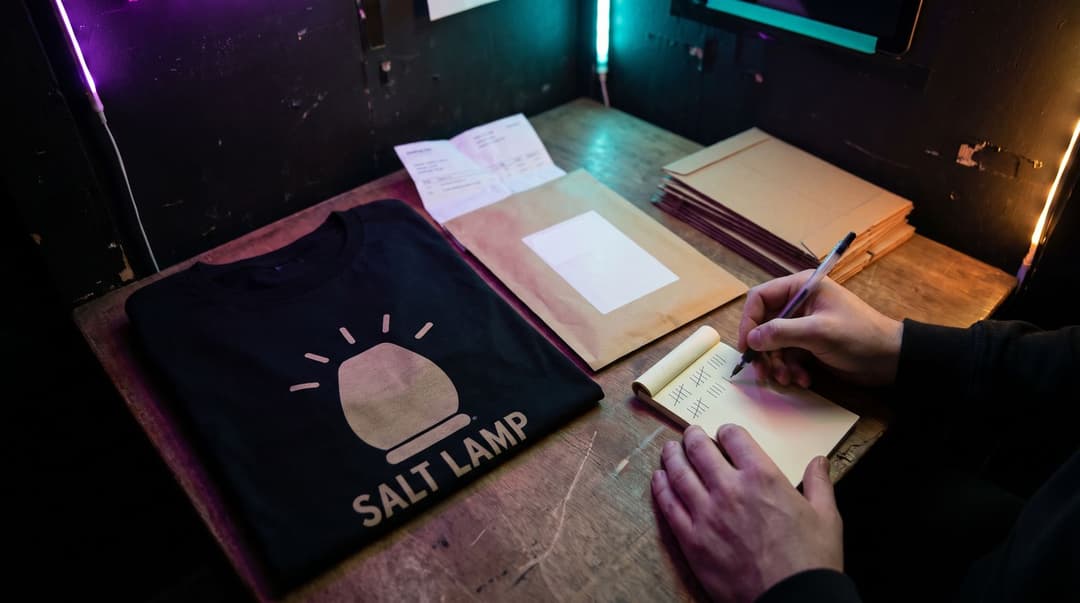
Base cost. What the printer charges you for the blank plus the print, before shipping. Your price minus the base cost minus fees is your margin. Our pricing guide does the arithmetic.
Margin. What you keep per unit after the base cost, shipping you absorb, platform cuts and payment fees. Other creators' prices tell you the ceiling; the margin is what is left after your costs.
MOQ. Minimum order quantity. Print on demand has none; screen printers, pin makers and plush factories do.
SKU and variant. A SKU is one sellable thing: this tee, this colorway, this size. Variants are the size and colour options under one product. A hoodie in three colours and six sizes is eighteen SKUs.
Wholesale and bulk. Buying a run at a lower per-unit price to hold stock and sell it yourself. The opposite of print on demand, and the route to higher margins once you know what sells.
White label. Products and packaging that carry your brand and not the supplier's. Custom neck labels, branded packing slips, no supplier logo in the box.
Merch shelf and merch panel. The YouTube merch shelf shows products under a video from a supported retailer; a Twitch merch panel is a linked image under your stream. Both are placements for a store you already have, not stores in themselves.
Collab. Two creators or a creator and a brand on one product, splitting design, promotion and revenue. Agree the split before the design, not after the sales.
In Chat
Capsule. A small, themed set of products released together, usually as a drop.
Exclusive and members-only. Products only some fans can buy: subscribers, members, patrons, people at the event. The gate is the point: the product is proof of belonging.
Grail. A fan's most-wanted item, usually retired and hard to find.
Flip and resell. Buying limited merch to sell on at a markup. A sign your run was too small, or your fans too keen, or both.
Deadstock. Unsold stock of a retired item, sometimes released later. In creator merch it usually means the box of mediums from a bulk order that did not sell.
"Take my money." Enthusiasm, not an order. Our guide to why fans buy merch explains the gap between the comment and the purchase.
The Short Version
Merch is sold, swag is free. A blank is the garment before you print on it, a colorway is one colour option, placement is where the print goes and print area is how big it can be. Print on demand makes one when ordered, a print provider does the making, DTG and screen print and embroidery are the ways it is made, and a drop is the moment you ask people to buy. Know those and the rest of the vocabulary is detail you can look up.
FAQ
What does merch mean?
Merch is short for merchandise: products sold with a brand, creator, band or show on them. In creator circles it means the things fans buy to support you and show they belong, usually apparel, stickers, pins and prints. Merriam-Webster traces the shortened word to the early 1980s.
What is the difference between merch and swag?
Merch is sold; swag is given away. Swag is the promotional goods handed out at events, in sponsor bags or as freebies, and the dictionary sense covers both promotional items and goods given to attendees. The same hoodie is merch when a fan pays for it and swag when a sponsor hands it out.
What is a merch drop?
A drop is a release of merch at an announced time, usually with a limited window or a limited run, so that fans buy at the moment rather than whenever. The opposite is an evergreen store where everything is always available. Drops create a reason to buy now; evergreen stores catch the fans who missed the drop.
Keep reading
- Do Fans Actually Buy Creator Merch? Why They Buy (and Why They Don't)
Why fans buy creator merch, why most of them don't, and what the gap between 'take my money' in chat and real orders means for how you design, price and launch your next drop.
- A Creator’s Guide to Custom Acrylic Merch
Ready to make your first merch drop? Learn how to design and sell custom keychains, charms, and standees that your community will actually love and collect.
- How to Sell Merch on TikTok Shop: A Creator's Guide
Ready to sell your own TikTok merch? Our creator's guide walks you through setting up TikTok Shop, designing your first item, and selling with shoppable videos.