why do fans buy merch
Do Fans Actually Buy Creator Merch? Why They Buy (and Why They Don't)
Why fans buy creator merch, why most of them don't, and what the gap between 'take my money' in chat and real orders means for how you design, price and launch your next drop.
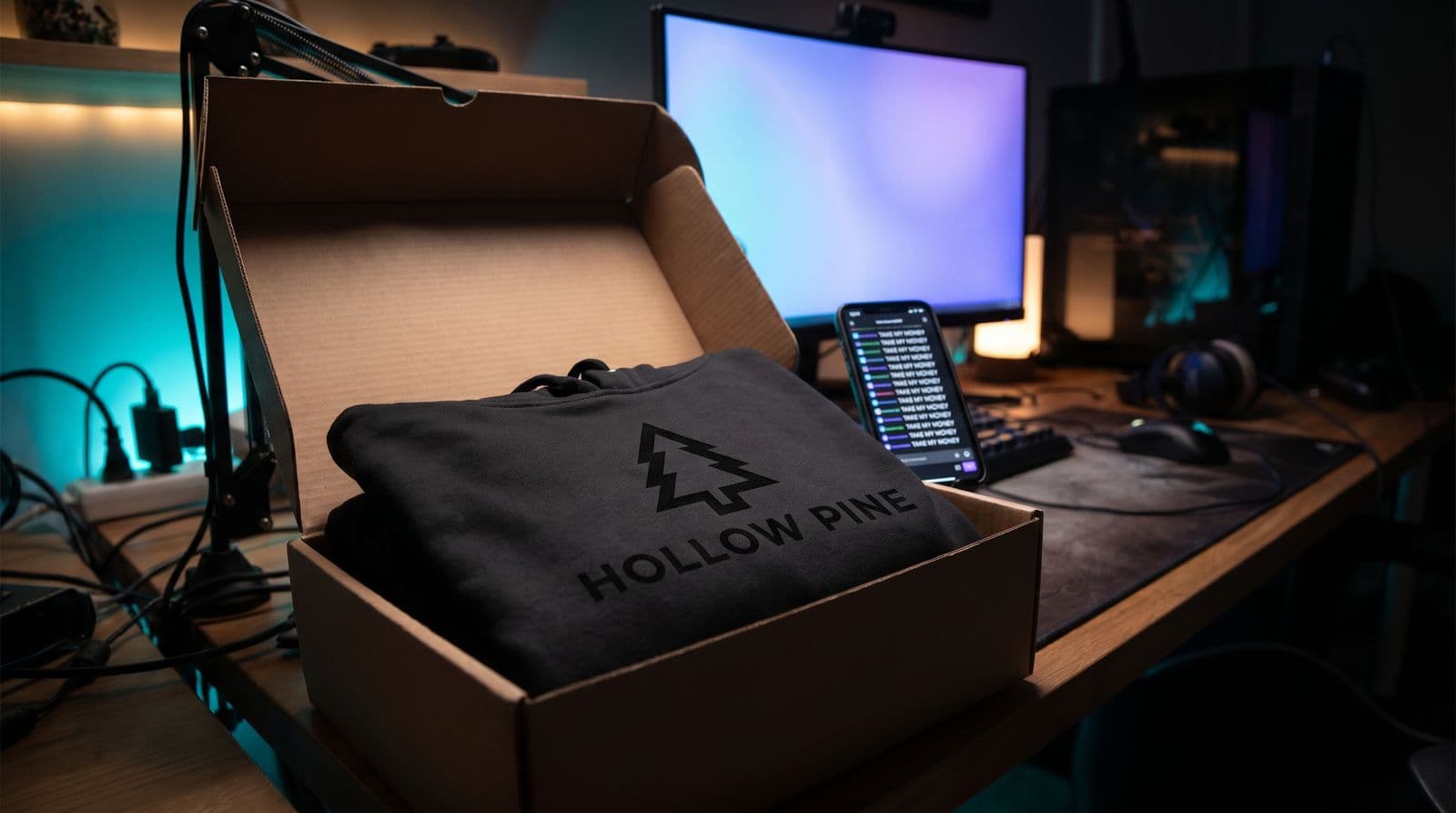
You have seen the comments. "Take my money." "Drop merch already." "I would buy anything with the logo on it." Then the drop goes live and twelve people buy, and nine of them are mods. The gap between what chat says and what chat does is the most common disappointment in creator merch. This guide is about why a fan reaches for their card, why most fans never do, and what that tells you about the next drop.
The Short Answer
Yes, fans buy creator merch, and a small share of any audience buys most of it. That is not a failure. A channel is a loose crowd of people who like your content, and merch asks a specific subset of them for something different: money, a shipping address, and a willingness to be seen in your brand. The fans who say yes are the ones for whom the item does a job. Understand the job and you can design for it.
Why Fans Buy
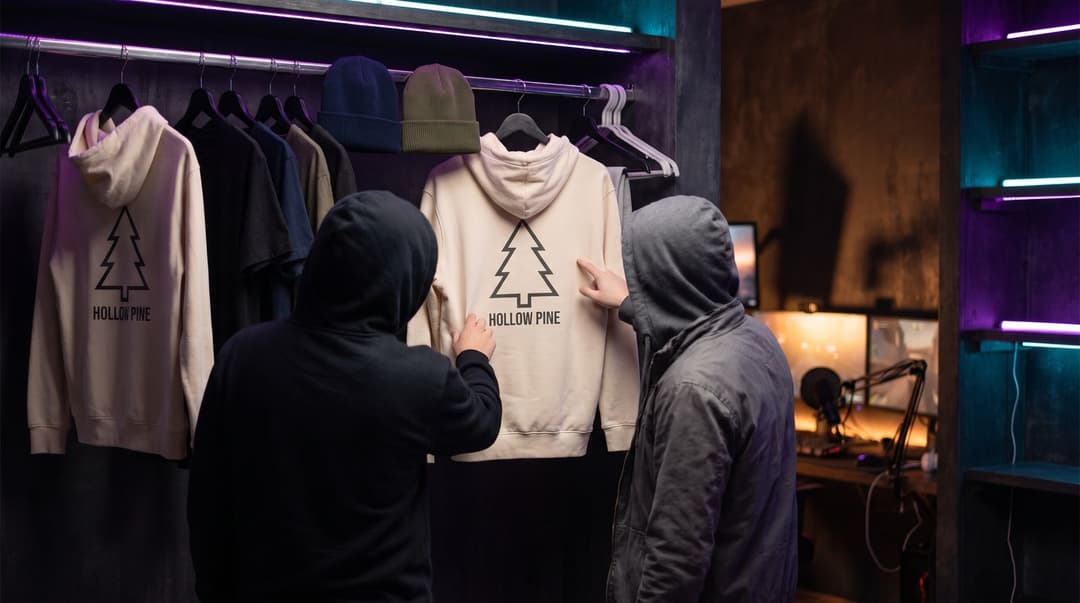
Ask a fan why they bought a hoodie from a creator and the answer is almost never "I needed a hoodie". The reasons fall into five groups, and a good drop hits at least two.
To Belong
The strongest reason, and the one people are least likely to say out loud. A community is an abstract thing until it has a uniform. Consumer researchers have a name for this. Muniz and O'Guinn's 2001 paper in the Journal of Consumer Research described "brand communities" as groups bound by shared rituals, in-jokes and a felt duty to one another, and most creator audiences fit that description exactly. The hoodie is a way of saying "I am part of this" to yourself, to other fans who recognise it, and occasionally to a stranger who asks about it. This is why community-first channels, the ones with a name for their audience and running bits that outsiders do not get, sell merch out of proportion to their size, and why a big channel with a passive audience often sells surprisingly little. Our guide to merch for gaming clans and Discord communities is built on this one idea.
To Support You in a Way That Leaves Something Behind
A subscription or a tip gives you money and then vanishes. A tee does the same thing and stays in the wardrobe, which makes the support feel permanent and makes it easier to justify. Fans who already sub will often buy merch on top of it, because the two scratch different itches. Fans who would never pay a monthly fee will sometimes buy a one-off, because a product feels like a purchase and a subscription feels like a commitment. Our guide to members-only merch covers how to serve both groups.
To Own the In-Joke
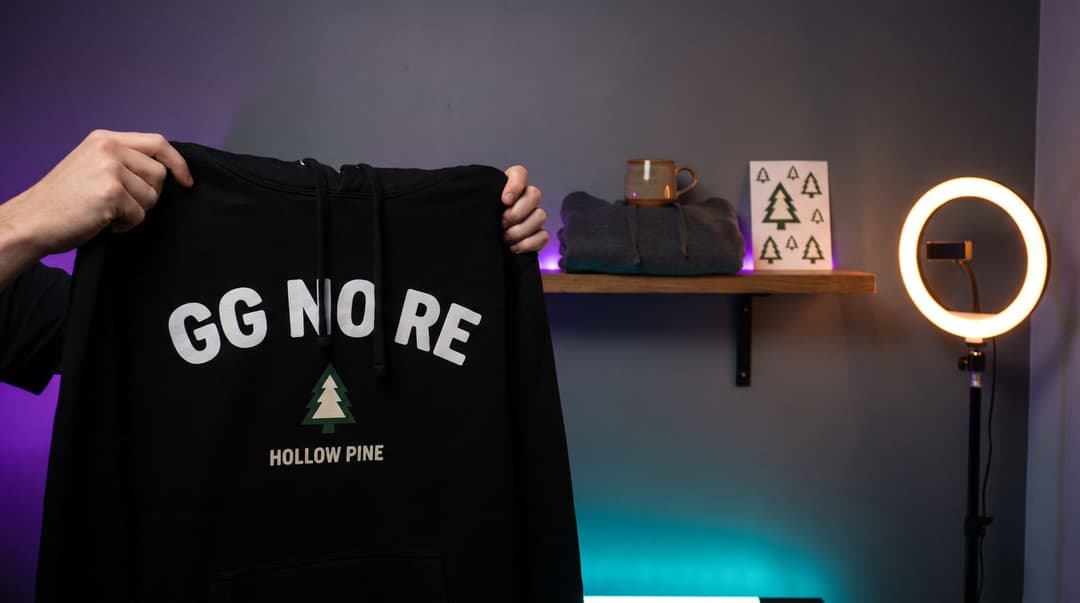
The catchphrase, the mis-click that became a meme, the thing chat types every time a certain song plays. Fans buy these because owning the joke proves they were there when it happened. It is the same instinct as a tour tee with the dates on the back. Nobody outside the community understands it, and that is the point. The practical consequence is that the best-selling design on most channels is not the logo; it is a reference. Our design guide has the layouts that make a reference work on fabric.
Because the Thing Is Good
Some fans buy because the item is simply a nice object. A heavyweight hoodie in a colour they would have bought anyway, a desk mat they needed, a sticker that is well made. The channel reference is the tiebreaker, not the reason. This group is bigger than creators expect, and it is the reason product quality matters even for a small drop. If the item would not sell with the logo removed, it is leaning entirely on loyalty, and loyalty has a short reach.
Because It Is a Moment
Launch night, a milestone, a charity stream, the first drop. Fans buy at moments, and the moment is doing a lot of the work. A drop with a reason attached, a window, and a live reveal converts people who would never buy from a store that just sits there. Our guide to announcing a drop is about making the moment without making it a sales pitch.
Why Fans Don't Buy
The larger and more useful list. Every fan who said "take my money" and did not buy had one of these reasons, and most of them are fixable.
- The design signals nothing. A logo on a blank tells a fan nothing about themselves. If the only thing the shirt says is "I watch this channel", only the most devoted will wear it. The fix is a reference, a phrase or a look that the fan would be proud to explain.
- They never saw the drop. You announced it once, in one video, three weeks ago. Most of your audience did not watch that video, or watched it and forgot. A drop needs to be visible for longer than it is interesting to you, which means the panel, the pinned comment, the overlay and the reminder. Our guide to showing merch on stream covers the low-effort ways to keep it in view.
- The price has no story. Creator merch costs more than a shop hoodie and fans know it. If the price is just a number, they compare it to the shop. If the price comes with a reason, the small run, the garment, the artist you paid, the cut that supports the stream, most fans accept it. Our pricing guide covers how to set it; the explaining is a separate skill, and the price benchmarks tell you where other creators have landed.
- They do not trust the product. They have been burned by thin tees and prints that cracked. If your mockups are all renders and nobody has seen a real one, the cautious fan waits. Order samples, photograph them, show them on stream, let a mod wear one. Our mockup guide is clear on this: real beats rendered.
- Buying is a chore. A link in a bio, to a store with an account wall, to a checkout that wants a phone number, to a shipping quote that doubles the price. Every step loses people. Fewer steps, clear shipping before checkout, and a store that works on a phone, because that is where chat is.
- It is not for them. The sizes stop at XL, the design is in a colour they would never wear, the only product is a tee and they wanted a mug. A drop that offers one thing is a drop that most of the audience can politely ignore. Our guide to products beyond t-shirts is about widening the net without widening the risk.
- They just like you from a distance. The last reason is the one you cannot fix, and it is the biggest. Most viewers are happy to watch, never comment and never buy, and that is a healthy audience. Merch is for the inner ring. Design for the inner ring and let the rest enjoy the show.
"Take My Money" Is Not Demand
A word on the comments. Enthusiasm in chat is real, but it is free, anonymous and in the moment, and buying is none of those. This is not a creator problem; it is a human one. A 2016 review of the research on intentions found that people routinely fail to do the things they say they will, and that even a large shift in stated intention produces only a small shift in what they actually do. Treat "drop merch" as a signal that the inner ring exists, not as an order book.
The honest way to size a first drop is to assume that only a small fraction of the people who said they would buy actually will, and to make that fine: print on demand, no stock, no minimums, so a drop that sells twenty units is a success rather than a garage full of boxes. Our first drop guide walks through the setup, and our launch checklist is the list to tick before you post the link.
What This Means for Your Next Drop
Put the two lists together and a few rules fall out.
- Lead with a reference, not a logo. One design that only the community understands, and one that a fan could wear anywhere. The reference sells; the plain one keeps the newcomer.
- Give the drop a reason and a window. A milestone, a season, a charity, a limited colour. Fans buy at moments, so make one.
- Show real product. Samples on stream, a mod in the hoodie, a photo of your own desk with the mat on it.
- Explain the price once, clearly. On the product page and once on stream. Then stop apologising for it.
- Keep it in view for a month. Panel, overlay, pinned comment, a reminder in the schedule. The drop is new to most of your audience long after it is old to you.
- Offer more than one way in. A tee, a sticker, a mug. The sticker is for the fan who wants to belong for a few dollars.
How to Find Out What Your Fans Actually Want
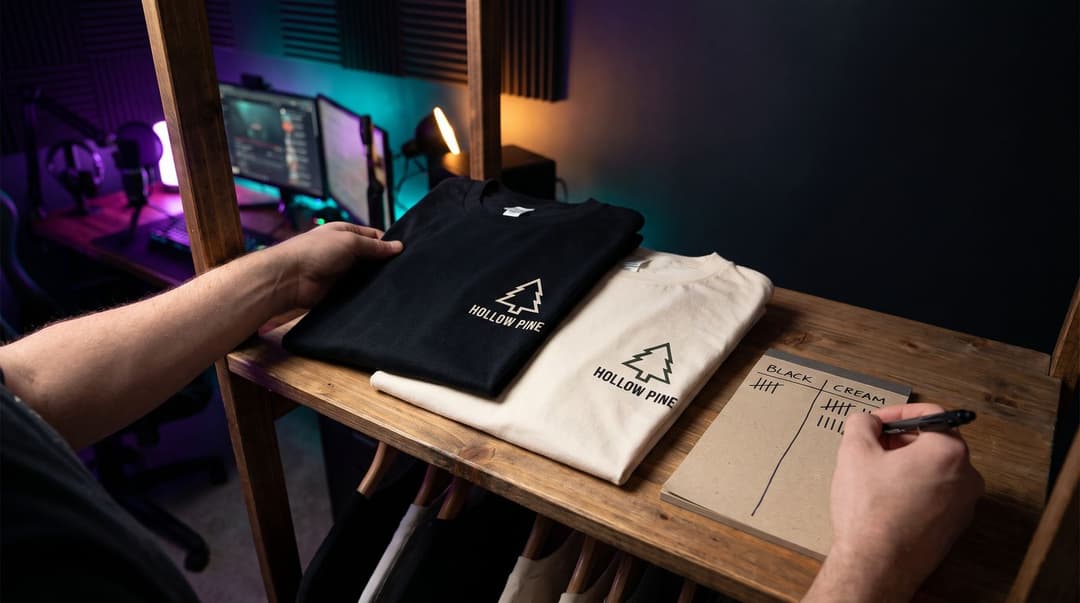
You do not have to guess. Three cheap ways to learn, in order of effort.
- Read your own chat. Search the VODs and the Discord for what people quote. The phrases that come up unprompted are your designs.
- Ask a narrow question. Not "would you buy merch?", which everyone answers yes. Ask "hoodie or tee?", "black or cream?", "this phrase or that one?". Narrow questions get honest answers because they cost nothing to answer honestly.
- Run a small drop and read the orders. The only real survey is the one people pay to answer. Which design sold, which size, which country.
The Short Version
Fans buy merch to belong, to support you in a way that lasts, to own a joke, because the object is good, or because the moment is right. They do not buy when the design says nothing, when they never saw the drop, when the price has no story, when they do not trust the product, when buying is a chore, or when they are simply happy watching. Most of your audience is in that last group and always will be. Design for the inner ring, make the drop a moment, show the real thing, and let a small number of real orders tell you more than a thousand comments ever could.
FAQ
Do people actually buy YouTuber and streamer merch?
Yes, but a small share of any audience does, and that share buys for specific reasons: to belong to the community, to support the creator in a way that leaves something behind, to own an in-joke, or because the item is genuinely good. The rest of the audience likes you and still never buys, which is normal and not a verdict on your channel.
Why do fans buy merch instead of just subscribing or donating?
Merch does something a subscription cannot: it exists in the real world, other people can see it, and it keeps meaning something after the stream ends. Fans who buy are usually paying for a visible sign of membership and a physical object with a memory attached, not for the cotton.
Why is nobody buying my merch?
The common reasons are, in order: the design signals nothing to a fan, the drop was announced once and forgotten, the price has no story behind it, the fan does not trust the product to be any good, or buying is a chore. Chat saying 'take my money' is a measure of goodwill, not of demand, and only a small fraction of it ever converts.
Keep reading
- Esports Merch: A Guide to What Fans Actually Buy
Trying to figure out what esports merch your fans will actually buy? We break down the essential items, the psychology behind fan purchases, and how to launch your first drop without risk.
- 10 Streamer Merch Ideas and Design Concepts Fans Actually Buy
Explore 10 streamer merch ideas fans actually buy, from mascots and inside jokes to limited drops and desk setups, plus tips on bringing designs to life.
- VTuber Merch Ideas Fans Actually Collect
Looking for VTuber merchandise ideas? We break down the merch fans actually collect, from simple stickers to limited edition sets. Plan your first drop right.