cheap merch ideas
Cheap Merch Ideas That Don't Look Cheap
Cheap merch ideas for streamers: stickers, sheets, totes, prints and postcards that cost little to make, why cheap reads as cheap, the design rules that hide the price, and how to post them.
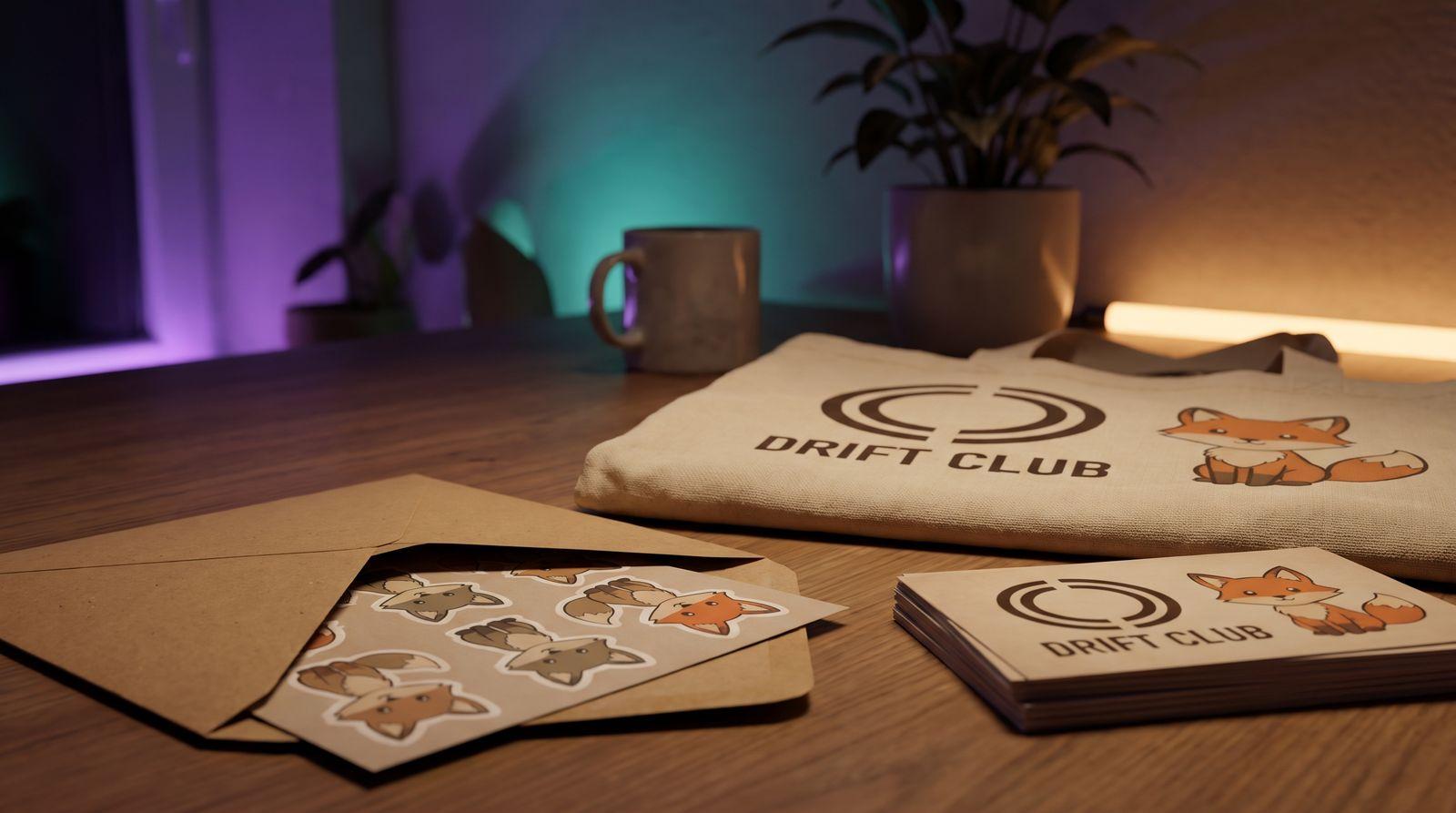
Cheap merch is not the problem. Cheap-looking merch is. A sticker that costs a couple of dollars to make can look like a considered object or like a freebie from a trade show, and the difference is almost never the money spent on it. This guide covers why cheap merch reads as cheap, the products that cost little and still look good, the design rules that hide the price, how to post small things without losing the margin, and what to skip.
Why Cheap Merch Looks Cheap
People assume price and quality travel together more closely than they do. In a paper in the Journal of Economic Psychology, Vlaev, Chater, Lewis and Davies found that people assume price and quality go together even in markets where they barely do. They also found the fix: give people a plausible reason why something can be both good and cheap, and the assumption weakens. Viewers judge a sticker by the same rule. You can let the low price set their expectation, or you can give them the reason it is cheap (it is small, flat and costs almost nothing to post) and let the object prove the quality.
Three things make low-cost merch look low-cost, and none of them cost money to fix. The first is a design that was drawn for a t-shirt and shrunk until the lettering fills a two-inch circle. The second is a product the viewer already owns in quantity, so one more generic version has no reason to exist. The third is packaging that says afterthought: a sticker loose in a plain envelope, bent in the post, with nothing to say who it came from.
Stickers and Sticker Sheets
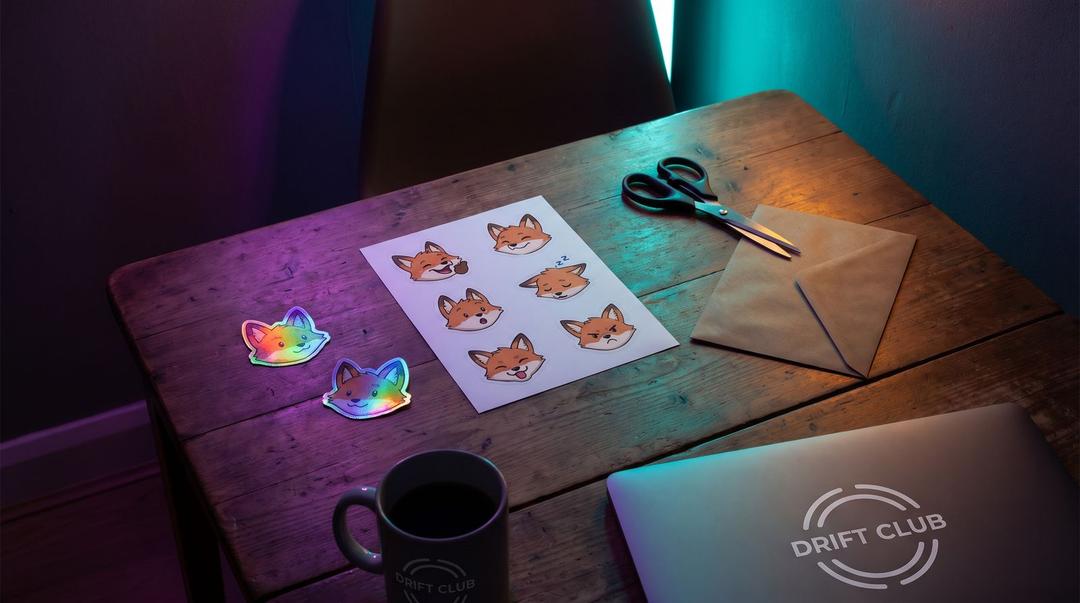
Stickers are the cheapest merch there is and the easiest to get wrong. Printful's sticker page has kiss-cut vinyl, holographic and sheet stickers at $2.20 to $5.05 each depending on type and size, plus shipping, with no minimum order. Those numbers are why stickers work as an entry product: a viewer can support the channel for roughly the price of a coffee, and you learn whether anyone wants your branding on an object before you commit to apparel.
The design rule is one idea per sticker. An emote on its own, cut to its outline, looks like a product. The channel logo, the channel name and a catchphrase crammed onto one circle looks like a label. If you have several emotes, a sheet of six small ones reads as a set, which is what fans actually collect and swap. Holographic vinyl is the cheapest upgrade in merch because the material does the work, and our guide to holographic stickers covers where the finish helps and where it fights the art.
Tote Bags
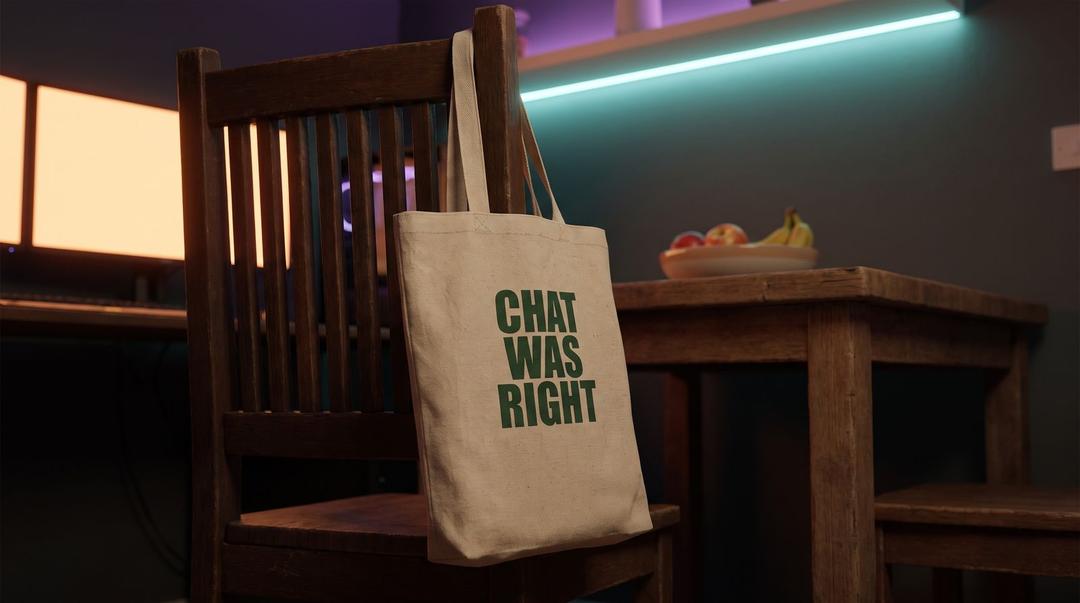
A tote is the cheapest thing a fan can carry in public that still functions as merch. Printify's tote bag page says its most affordable tote starts at $5.94 plus shipping, across plain canvas, organic cotton and recycled polyester styles. At that cost a tote can sell for the price of a mid-range sticker pack and still leave room.
Totes look cheap when the print is small and centred, because the bag folds and the design disappears. Print large, in one colour, high on the bag, and prefer a phrase over a logo. "Chat was right" on a natural canvas tote is a better product than a full-colour logo on the same bag, because the person carrying it is wearing a joke rather than an advert. One colour also hides the fact that canvas does not hold fine detail well, which is the main reason cheap totes look cheap.
Prints, Postcards and Mini Posters
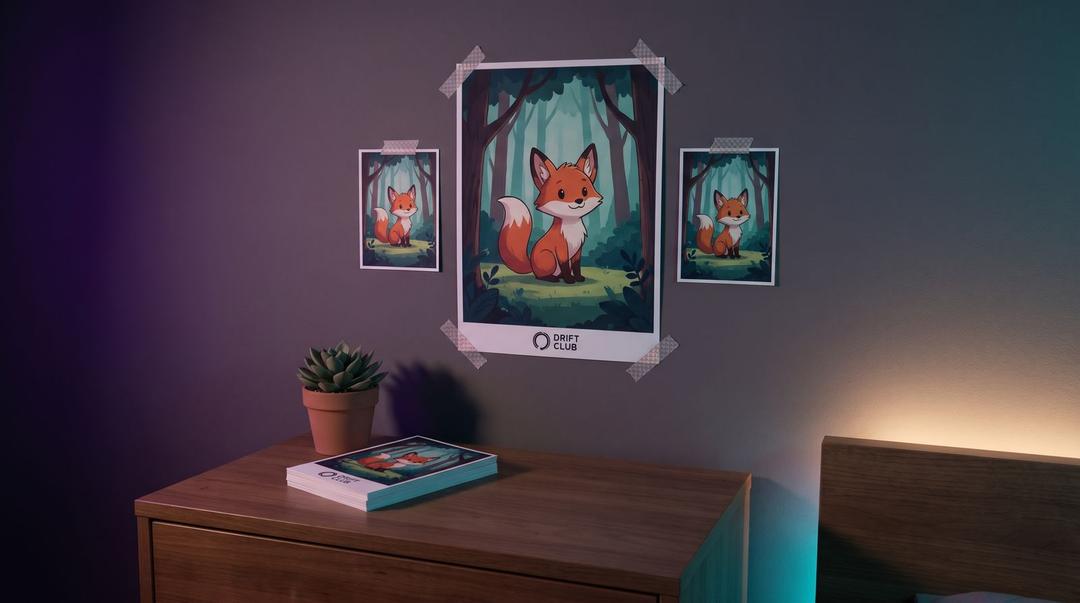
Paper is underrated. A postcard of your stream art, your emote lineup or a frame from a memorable moment costs about the same as a sticker, ships flat, and has a surface big enough to show the artwork properly. Signed, numbered or with a one-line handwritten note on the back, it becomes a keepsake rather than a print. Small posters work the same way for channels with illustrated branding: the art is the product and the low price is explained by the format, which is exactly the reason the paper above describes.
Keep the text off the front. A postcard that says the channel name in large letters is a flyer. A postcard that shows the art, with the channel name small on the back, is something a fan pins above a desk.
Buttons, Pins, Keychains and Other Small Hard Goods
Buttons, soft enamel pins and acrylic keychains sit a step above stickers in cost and a step above in perceived value, because they are objects rather than printed surfaces. The same one-idea rule applies: a single emote or symbol, not the full lockup. They suit channels with a visual identity fans already recognise, and they are a poor fit for a brand that is still mostly a username. If your logo is a wordmark, make stickers and postcards first and come back to hard goods when there is an image to put on them.
Design Rules That Hide the Price
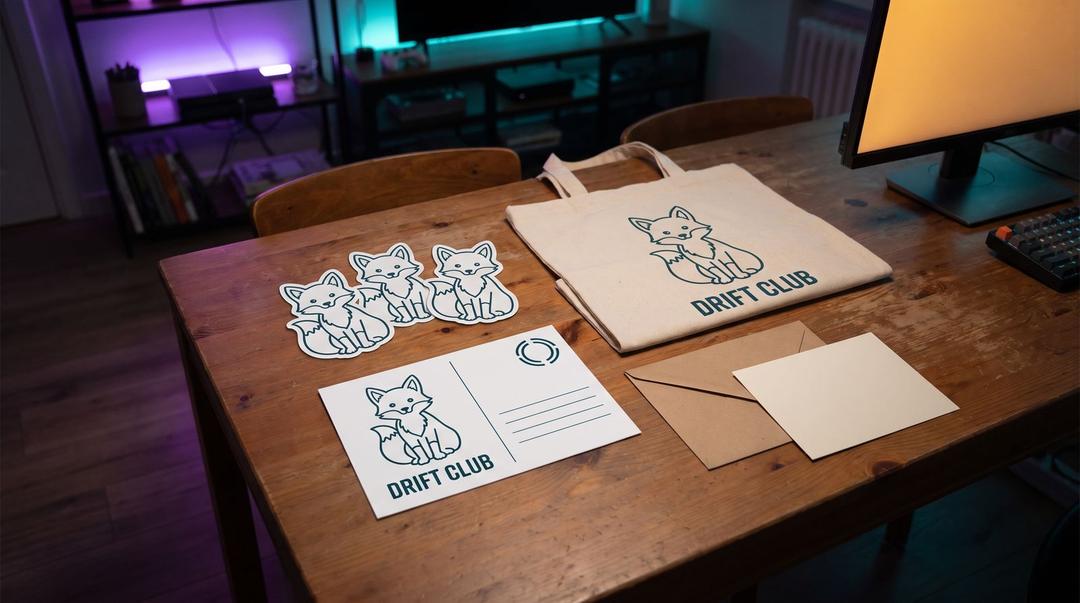
Most of the gap between cheap and cheap-looking is design, so these rules matter more than the product list.
Use one colour wherever the product allows it. Single-colour designs print cleanly on every surface, cost nothing extra, and look deliberate. Full-colour gradients on a canvas tote or a small sticker show every limit of the material.
Design for the object, not for the tee. Draw the sticker at sticker size and check it at arm's length. If it needs a magnifier, it is a t-shirt design.
Prefer the inside joke to the logo. Fans buy the thing that only they understand. A logo tells the world which channel; a phrase from chat tells the fan they were there.
Make a set. Three stickers, a postcard and a tote that share one colour and one typeface look like a merch line. The same five items in five styles look like leftovers.
Show it properly. A clean mockup of a sticker on a water bottle or a tote on a shoulder does more for the perceived value than any amount of description, and our guide to merch mockups explains how to make them without a studio.
Package it. A stamped kraft envelope, a backing card and a two-line handwritten note cost pennies and are the part the fan photographs.
Posting Small Things Without Losing the Margin
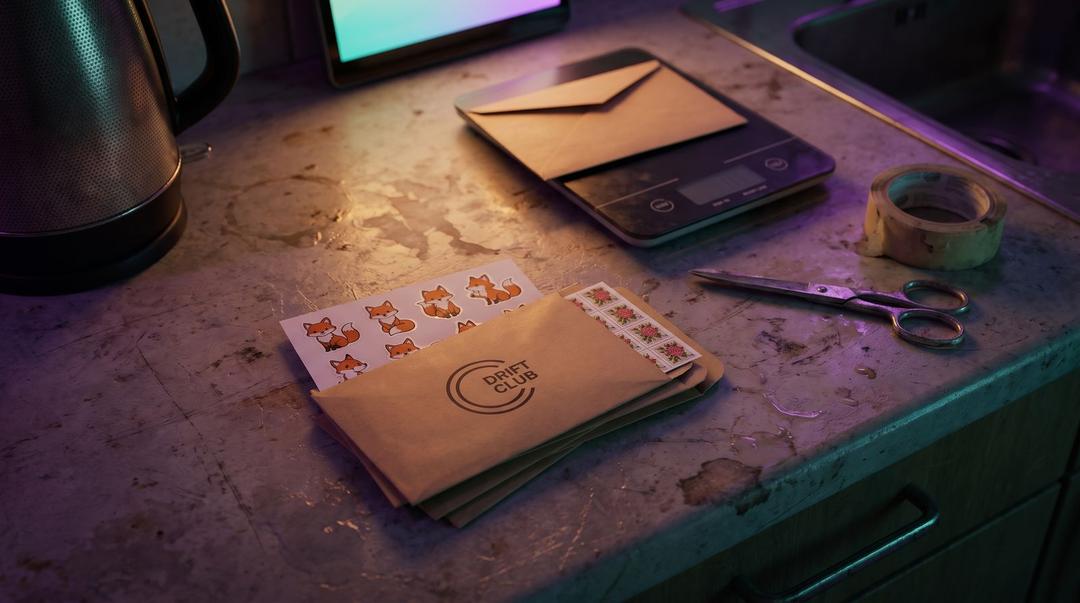
If your print-on-demand service ships every order, the shipping line is its problem and yours is only to price it. Many small creators order stickers and postcards in a batch, though, and post them by hand with a note, which is where the margin can quietly vanish.
The cheapest post is a letter, and a letter has rules. USPS's letter page sets the letter rate for envelopes up to 11-1/2 by 6-1/8 inches and a quarter inch thick, and one $0.82 Forever stamp carries an ounce. A large envelope starts at $1.69, and anything rigid or lumpy picks up a $0.49 nonmachinable surcharge. In practice that means a sticker sheet or postcard in a thin paper envelope goes for a stamp, while a sticker on a stiff backing board in a rigid mailer may cost you the surcharge. Other countries' carriers publish the same kind of rules, and they are worth reading before you set a shipping price.
Build the postage, the envelope and your time into the price before you announce it. Our guide to pricing your streamer merch walks through the sum, and the short version is that a sticker you sell for a few dollars has no room for a shipping mistake.
What to Skip
Thin, cheap t-shirts. A thin, cheap blank with a full-front print is the item most likely to make your whole line look cheap, because it is worn, washed and compared with every other tee the fan owns. If you cannot afford a decent blank yet, sell stickers and totes until you can.
Anything unprinted. A plain lanyard, a plain pen or a plain water bottle with a tiny logo is promotional product, not merch. Fans notice the difference immediately.
Novelty for its own sake. A product chosen because it was cheap and available, rather than because the design belongs on it, is the definition of cheap-looking.
Too many items at once. Five products in one drop spreads your design effort thin and your orders thinner. Two done well sell better than six done quickly.
Start With One Thing
Pick the product your art already suits, usually a sticker or a postcard, design it at the size it will be, print it in one colour if you can, and send it in an envelope with a note. That is a merch line a fan can be glad to have paid for, and the whole thing can be set up without spending anything up front, as our guide to making merch for free shows. The hoodies can wait until the stickers have sold.
FAQ
What is the cheapest merch to make?
Flat, light things: stickers, sticker sheets, postcards and small prints. They cost a few dollars at most to produce on a print-on-demand service, ship in an envelope, and need no sizes or stock. A plain canvas tote is the cheapest wearable item that still looks like merch.
Why does cheap merch look cheap?
Usually one of three things: a design made for a t-shirt and shrunk to fit, a product the viewer already owns a dozen of, or packaging that says afterthought. None of those are fixed by spending more on the product. They are fixed by designing for the object you are actually making and by putting a little care into how it arrives.
Should a small streamer start with cheap merch?
Yes. A sticker or postcard lets a viewer support you for the price of a coffee, tests whether anyone wants your branding on an object, and teaches you the ordering and shipping side before you risk the margin on a hoodie. Most channels that sell hoodies started with stickers.
Keep reading
- Do Fans Actually Buy Creator Merch? Why They Buy (and Why They Don't)
Why fans buy creator merch, why most of them don't, and what the gap between 'take my money' in chat and real orders means for how you design, price and launch your next drop.
- How to Make Merch for Free: A Zero-Cost Setup for Small Creators
How to make merch for free as a small creator: free design tools and fonts, free mockups, a storefront with no monthly fee, where to sell it on Twitch and YouTube, and the costs that are not free.
- Twitch Merch: How to Make and Sell It From Your Channel
How to make and sell Twitch merch: what Twitch does and does not do for you, why viewers buy, which products to start with, what you may not print, and where to put the link on your channel.