twitch merch
Twitch Merch: How to Make and Sell It From Your Channel
How to make and sell Twitch merch: what Twitch does and does not do for you, why viewers buy, which products to start with, what you may not print, and where to put the link on your channel.
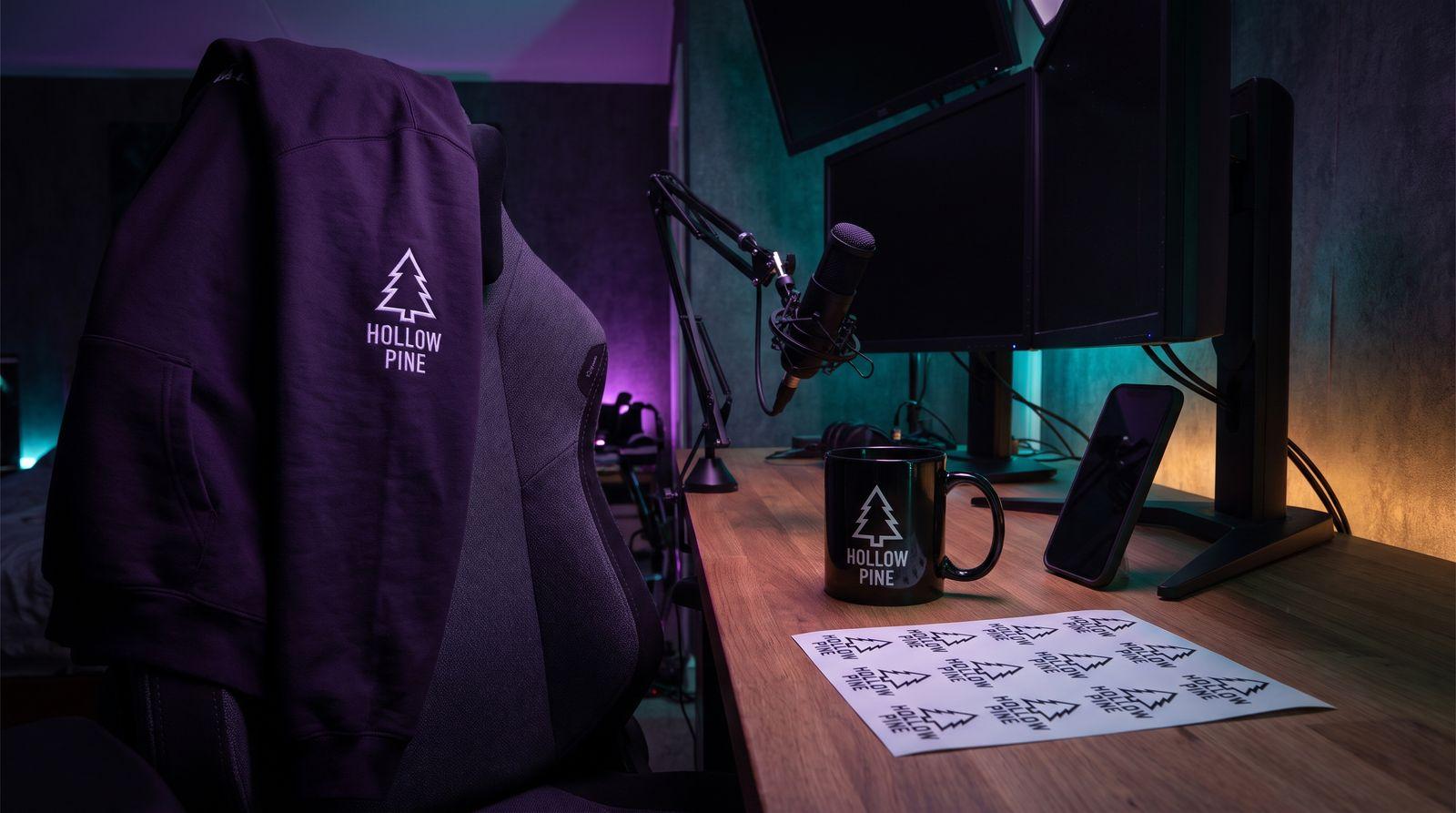
Twitch merch is the hoodie a viewer wears to the shops with your channel name on the chest, and the sticker on their laptop that makes a stranger ask what it means. Twitch itself will not make or sell it for you. What it gives you is the audience, a channel page with room for a link, and a chat that will ask when the merch is coming. This guide covers what Twitch does and does not do for merch, why viewers buy it, which products to start with, how to set up a store that makes each item only when someone orders, what you may not print, where to put the link, and how to price and launch.
What Twitch Does and Doesn't Do for Merch
Twitch's own monetization is subs, Bits and ads, and all of it is gated behind the Affiliate programme. Twitch's Affiliate Program FAQ lists the requirements as 25 followers, four hours streamed on four different days, and an average of three viewers over any four stream days in the last 30, and notes that the standard subscription split for Affiliates is 50/50 with Twitch and that payouts need a balance of at least $50 with most payout methods. None of that touches merch. There is no merch tab in the Creator Dashboard and no Twitch cut of a shirt sale.
That is good news. Your merch store is yours, runs on any platform you choose, sells to viewers from YouTube, TikTok and Discord as well as Twitch, and the margin stays with you and the printer. The job on the Twitch side is only to make the store easy to find: an info panel under the player, a chat command, a mention on stream. Our guide to Twitch Affiliate merch covers the timing question in more detail; the short answer is that you can open a store on day one, and most streamers are right to wait until a few regulars have shown up.
Why Twitch Viewers Buy
Merch sells to people who feel part of something, and Twitch audiences are unusually good at that. A 2018 survey of 2,227 Twitch users found six motivations that helped explain live-stream engagement, "social interaction, sense of community, meeting new people, entertainment, information seeking, and a lack of external support in real life", as reported in Hilvert-Bruce, Neill, Sjöblom and Hamari's study in Computers in Human Behavior. Three of those six are about belonging to a group.
A hoodie is how a viewer carries that belonging out of the chat. Which means the design that sells is rarely your face or your logo at full size. It is the in-joke, the emote, the phrase chat spams, the mascot that appeared one night and never left. If you are not sure what your community's markers are, read your own chat for a week and write down what repeats. That list is your first drop.
Pick a Product Fans Will Wear
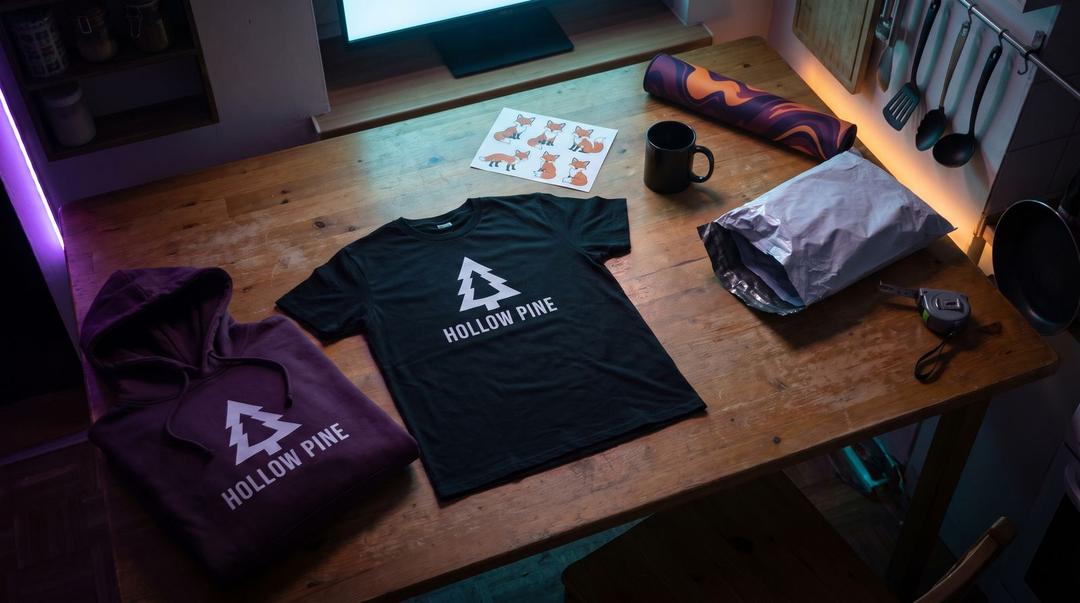
Start with one or two products, not a catalogue. The first drop is a test of whether anyone buys at all, and a store with twelve empty variants looks worse than a store with two things that sell.
- A t-shirt. The lowest base cost and the widest appeal. One design, dark and light colourway, unisex sizing with the size chart linked.
- A hoodie. The product streamers are known for, because viewers watch at night in cold rooms. Higher base cost, higher price, and the one people photograph themselves in.
- Stickers. The entry price for viewers who want to take part for a few dollars. Emotes make natural sticker designs, with the caveat below about what you own.
- A mug or a desk mat. For the viewer who watches at a desk. Desk mats take a full-width design and sit in frame on the buyer's own stream.
Set Up the Store
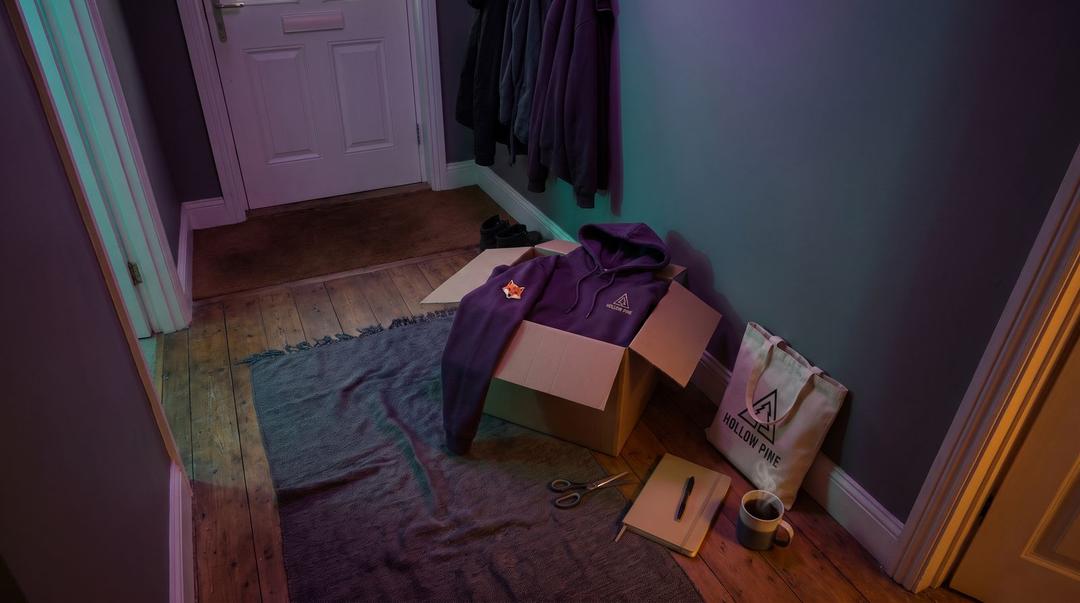
Print on demand is the right model for Twitch merch because it removes the two things that sink first drops: money up front and a box of unsold mediums. You upload the design, set a price, and the printer makes and ships each item when a viewer orders. You never touch stock.
The setup has three parts. The printer, which makes the product. The storefront, which takes the order and the payment. And the link between them, which passes the order from one to the other. Some services bundle all three into one creator-focused store; others expect you to connect a printer to a storefront such as Shopify, Etsy or a creator platform. Which one suits you depends on how many products you want, whether you also sell digital goods, and how much you care about owning the customer list. Our platform finder asks ten questions and ranks the options against the same criteria, which is quicker than reading twelve reviews.
What You Can and Can't Put on It
Three rules of ownership catch new streamers out, and all three are enforceable.
Twitch's brand. You cannot sell merch with the Twitch logo, the Glitch or the Twitch name on it. Twitch's Trademark Guidelines allow you to "print a limited number of pieces of clothing for your personal use" using "the Glitch logo along with your Twitch Channel name", and say that otherwise Twitch "doesn't permit the use of our Brand Assets on merchandise or manufactured items, this includes uploading images of such products on 3rd party printing or production sites". The same page says Twitch does not allow use of emotes without express permission, because Twitch and third parties hold rights in them. Your own custom emotes are your artwork, if you or your artist made them; global Twitch emotes are not.
Games and other people's characters. Fan art of the game you stream is the most common merch idea and the most common takedown. The studio owns its characters and logos, and the printer will refuse or remove the listing when asked. Original characters, your community's mascot and your own phrases are safe; anything you did not draw and do not own is not.
Your artist's work. If a commissioned artist drew your emotes or logo, check the commission terms allow commercial use on products. Many standard commissions cover stream use only. A one-line written agreement that you may sell merch using the artwork, with whatever extra fee the artist asks, solves it before the first order.
Put It Where Viewers Will See It
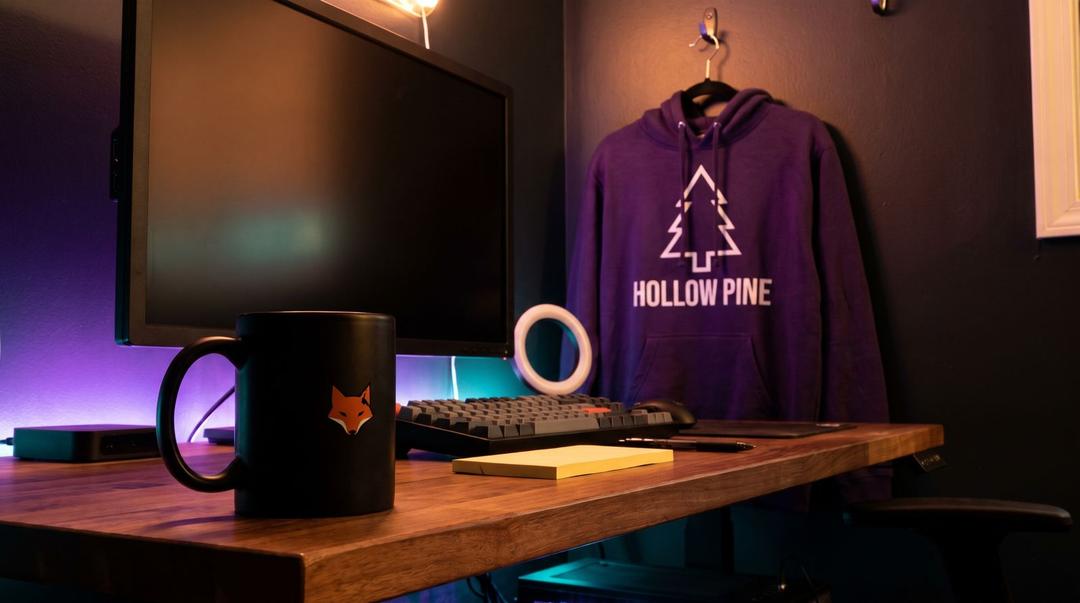
Twitch gives you three places for a merch link, and the store only sells if all three are used.
The info panels. The panels under your player are where viewers look for links. Twitch's Channel Page Setup guide describes info panels as "a space for broadcasters to customize their channel with information, links and images using the editing language, Markdown", with panel images under 2.9 MB and no larger than 320 by 300 pixels. Make a panel image that shows the actual product, not a generic "MERCH" button, and link it straight to the store. Our guide to adding a Twitch merch panel walks through the setup and the mistakes that make panels get ignored.
A chat command. A !merch command that posts the store link answers the question the moment someone asks it, and lets regulars answer for you. Set it up in whichever bot you already use.
On stream. Wear the merch. Put a mug in frame. When a viewer posts a photo in Discord, show it on stream and thank them by name. None of this is a sales pitch and all of it sells more than a pitch would. A fixed reminder on a timer, once an hour at most, is the limit before chat starts to resent it.
Price It and Launch
Pricing is base cost plus shipping plus your margin, and the mistake is to pick a price that feels fair without knowing the first two. Look up the printer's base cost for your exact product and the shipping to your main audience's country before you set anything. Our guide to pricing your streamer merch covers the arithmetic and where small streamers tend to sit. Two general rules: do not undercut what the product costs to make in the hope of volume, and do not price a hoodie as if you had a hundred thousand viewers when you have a hundred.
Then launch it as a drop rather than quietly switching the store on. Tell chat a date, show the sample on stream the week before, open the store live and read out the first orders. A two-week window with a closing stream gives people a reason to decide. After it closes, post the photos viewers send you, note what sold and what did not, and let that decide the second product.
Keep It Honest After the First Drop
Merch works on Twitch for the same reason subs do: viewers want to be part of the channel, and they will pay a little for a way to show it. That only lasts while the product is worth the money. Answer shipping questions quickly, replace anything that arrives wrong, and resist the urge to add a product every month. One good hoodie that people wear in public is worth more to a channel than a store full of things nobody ordered twice.
FAQ
Does Twitch have a built-in merch store?
No. Twitch's monetization tools for Affiliates and Partners are subscriptions, Bits and ads. Merch is sold through a store you set up elsewhere, usually a print-on-demand service connected to a storefront, and linked from your channel's info panels, your chat commands and your stream.
Do I need to be a Twitch Affiliate to sell merch?
No. Affiliate status unlocks subs, Bits and ads on Twitch itself; a merch store lives outside Twitch and anyone can open one. Most streamers wait until they have a regular audience because merch sells to people who already feel part of the channel, and that usually arrives around the same time as the Affiliate invite.
Can I put the Twitch logo on my merch?
Not for sale. Twitch's trademark guidelines allow a limited number of pieces of clothing for your personal use carrying the Glitch logo with your channel name, and nothing else. Merchandise using Twitch brand assets needs written permission from Twitch, and that includes uploading such designs to a print-on-demand site.
Keep reading
- How to Add a Twitch Merch Panel to Your Channel
Learn how to set up your Twitch merch panel in a few simple steps. This guide shows you how to create the graphic, upload it, and add a clickable link to your shop.
- How to Make Merch for Free: A Zero-Cost Setup for Small Creators
How to make merch for free as a small creator: free design tools and fonts, free mockups, a storefront with no monthly fee, where to sell it on Twitch and YouTube, and the costs that are not free.
- Merch for Faceless Creators: A Brand Fans Wear Without Your Face
How to build merch for a faceless YouTube channel or stream: the brand assets that replace a face, merch ideas for voice, mascot and explainer channels, and how to sell it without appearing on camera.