family friendly merch
Merch for Family-Friendly Channels: What Works for Kids and Parents
Merch for family-friendly channels: what YouTube's made-for-kids setting blocks, products for kids and parents, the safety rules for children's products, and how to sell without the merch shelf.
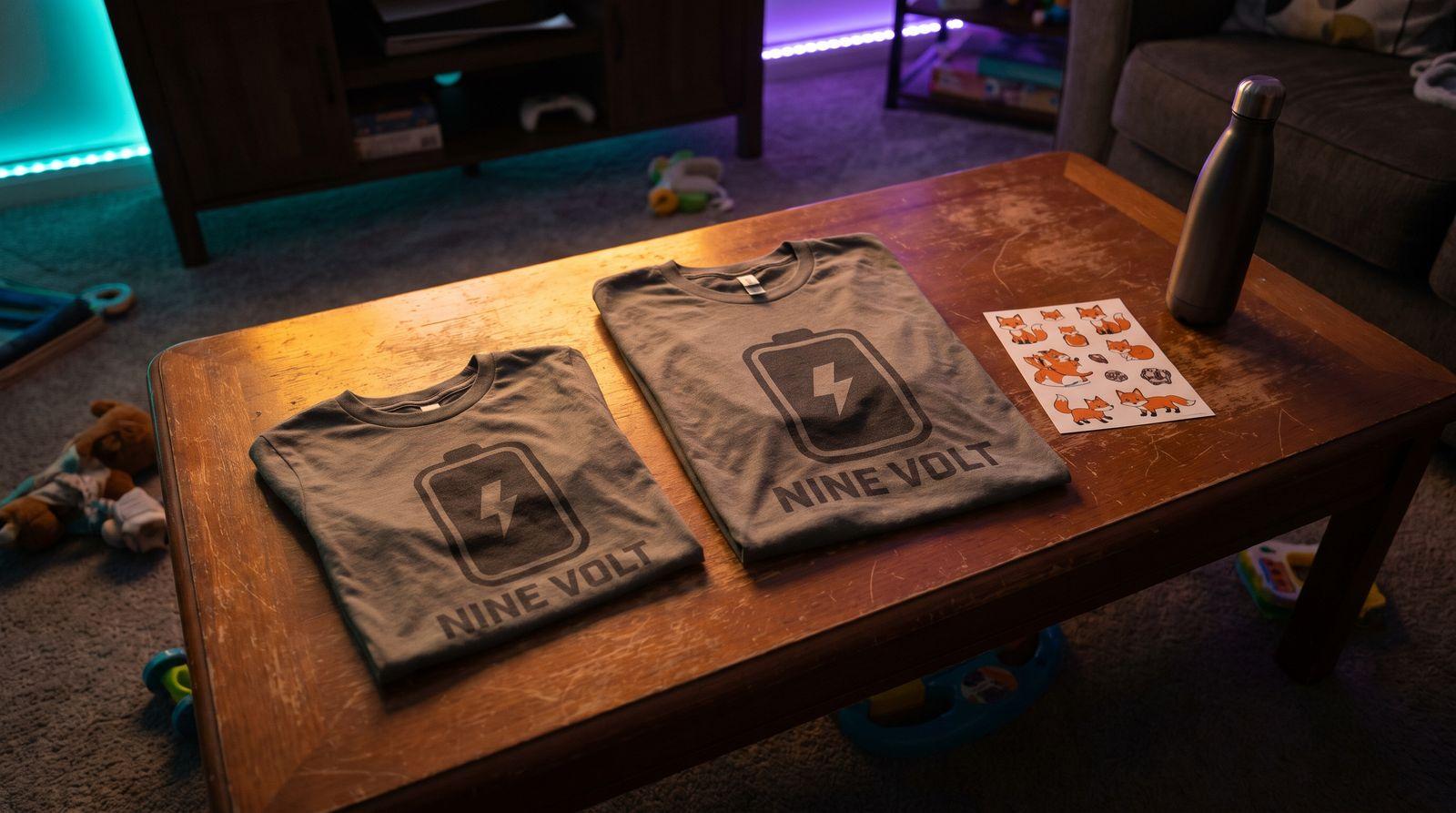
A family-friendly channel has two audiences and one buyer. Kids watch; parents pay. That changes what merch works, how it has to be labelled and where you can sell it, because YouTube switches off its own merch tools on content set as made for kids. This guide covers who actually buys from a family channel, what the made-for-kids setting blocks, the products that work for children and the ones that work for parents, the safety rules that apply to anything made for a child, designs that pass the parent test, and how to sell without the shelf.
Who Buys Merch From a Family Channel
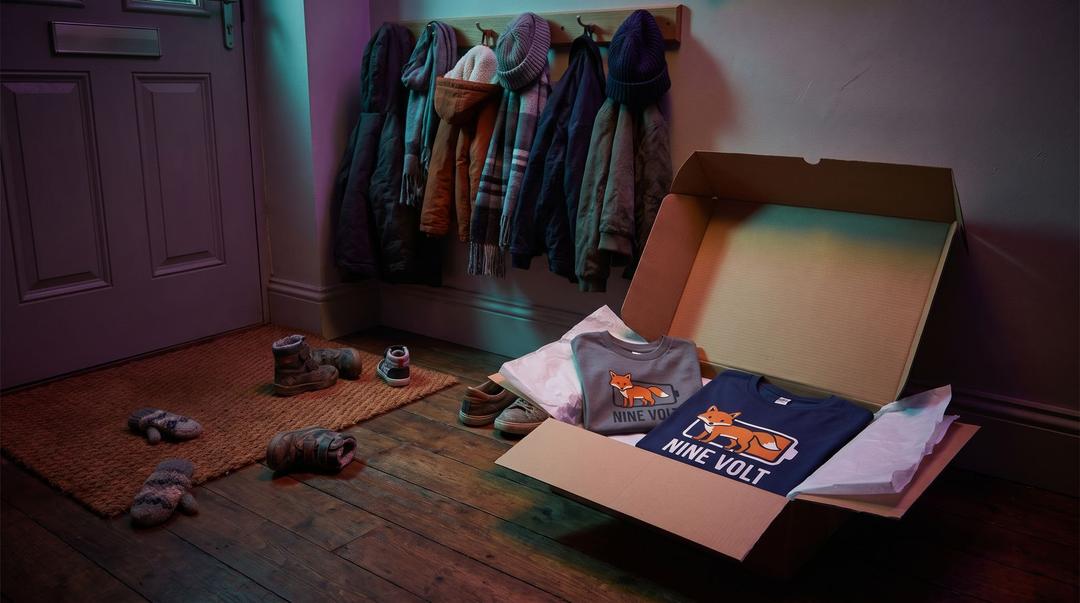
On most creator channels the fan and the customer are the same person. On a family channel they are not. A seven-year-old can want the t-shirt with all their heart, but a parent enters the card number, chooses the size, reads the label and decides whether the thing is worth it.
It means the product has to pass two tests at once. The child has to recognise it as theirs: the character, the catchphrase, the colours from the intro. The parent has to recognise it as a reasonable purchase: a garment that will wash, a sticker that will not end up on the car window, a bottle that fits in a school bag.
It also means your marketing talks to adults. The child sees the merch on screen; the parent sees it in the description, in an email, on the family's social accounts. Write for the person paying.
What the Made-for-Kids Setting Blocks
YouTube asks every creator to say whether their content is made for kids. Its guide to the setting explains that it applies "according to an agreement with the US Federal Trade Commission (FTC)" under the Children's Online Privacy Protection Act. The factors it lists include the subject matter, whether children are the intended audience, child actors or models, "characters, celebrities, or toys that appeal to children" and "songs, stories, or poems for children". Most family channels tick several.
The setting has a price. YouTube's page on setting your audience states that "the channel memberships 'join' button and the merch shelf won't be available on content set as made for kids", alongside comments, the notification bell, cards and end screens, Super Chat and live chat. If the whole channel is set as made for kids, the Posts tab goes too. YouTube's product shelf page lists "your content's audience is set as made for kids" as one of the reasons the shelf will not show.
So the plan for a family channel is a store that lives outside YouTube and a route to it that does not depend on the features above. Our guide to the merch shelf requirements covers what the shelf needs when it is available; for a made-for-kids channel, skip to the selling section below.
Products That Work for Kids
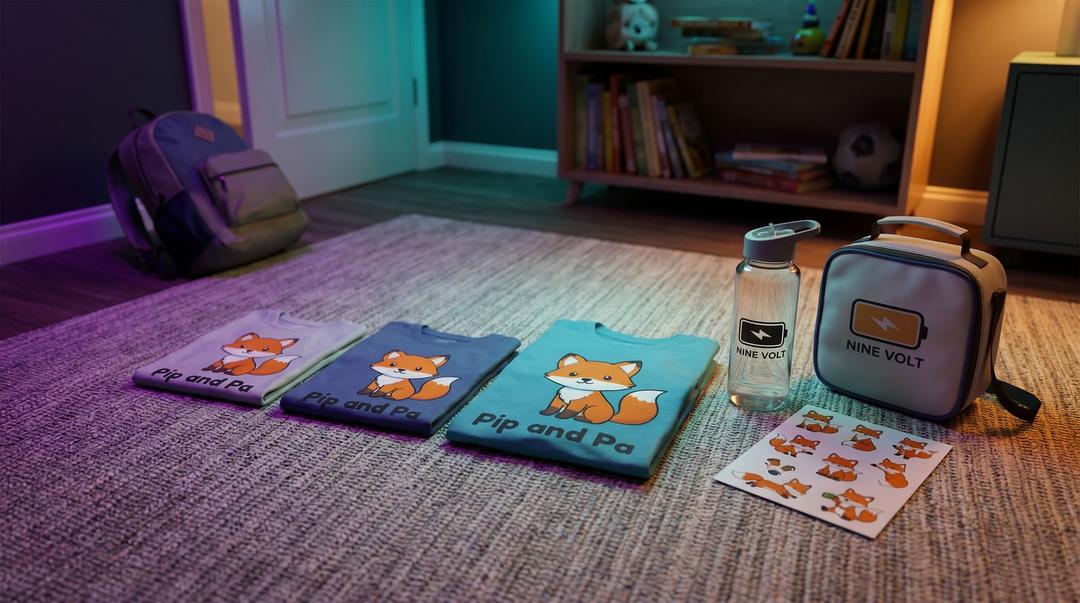
Start with the things a child will wear or carry every day, in the sizes children actually are.
Youth and toddler t-shirts. The core product. Printful's kids and teen t-shirt catalog lists a Toddler Staple Tee in 2T-5T, a Youth Classic Tee in XS-XL and an Organic Cotton Kids T-Shirt for ages 3 to 13, with options "ranging from 6M baby sizes to youth XL". Offer the full run, because a channel's audience spans several years and the parent of a four-year-old and the parent of an eleven-year-old both want the shirt.
Stickers. Cheap, safe for most ages, and the product a child can buy with pocket money. A sticker sheet of the channel's characters does the work of five products. Our guide to holographic stickers covers the version children fight over.
Water bottles and lunch bags. They go to school, which is where other children see them. A bottle with the channel mascot is the most visible merch a kids' channel can make, and parents buy bottles anyway.
Backpacks and pouches. Higher price, higher visibility, and a product the parent was going to buy before the school year started.
Posters and wall prints. Bedroom walls are where kids' merch lives longest.
The thing to avoid is anything with small parts, cords or magnets aimed at young children. Keep the kids' line to printed textiles, stickers, drinkware and paper until you understand the safety rules below.
Products That Work for Parents
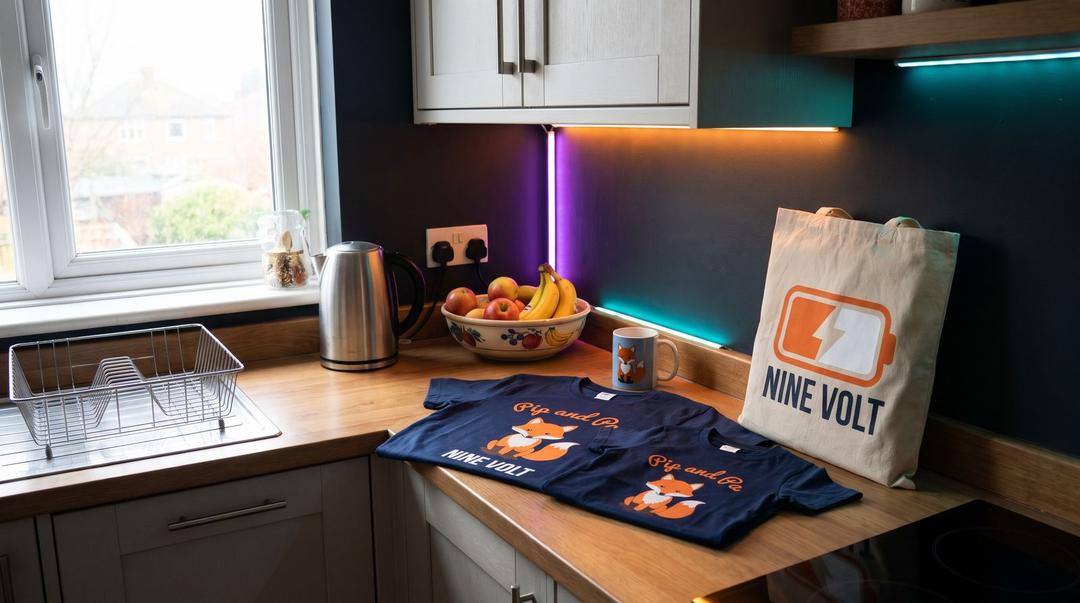
The parent is the buyer, and a good share of them want something for themselves. Two kinds of product work.
The matching set. An adult tee that pairs with the youth tee, a "big" and "little" version of the same design, or a family set from baby bodysuit to adult hoodie. Printify's kids' clothing page describes a range "from newborn snaps to teen hoodies" with no minimums, which is what a matching family set needs: one design across every size without buying stock in any of them.
The parent's own product. A mug, a tote bag or an adult tee with a line only the parent gets: the catchphrase from the episode the child has watched forty times, the "I survived the slime episode" of your channel. This is where the humour of a family channel lives, because the child's products stay simple and the parent's can be knowing.
Price the adult items as adult items. A parent buying a youth tee and an adult tee together expects the bundle to make sense; our guide to pricing streamer merch covers how to set a bundle without giving the margin away.
Safety and Labelling for Children's Products
In the United States a product "designed or intended primarily for children 12 years of age or younger" is a children's product. The Consumer Product Safety Commission's children's products page lists "an article of clothing" among the items it covers and notes that "the sizing of the product and the themes and decorations depicted on the products would likely play a part" in deciding. The same page says children's products "are required to undergo third-party testing and to have a written Children's Product Certificate (CPC) demonstrating compliance".
Children's products also carry a tracking label. The CPSC's tracking label page says it must be "visible and legible", "permanently affixed to the product and its packaging, to the extent practicable", and must make the manufacturer or private labeler, the location and date of production and batch information ascertainable.
What this means for a creator using print on demand: the blank garment and the printed product both sit inside these rules, and who holds the certificate and who applies the label depends on the supplier and on whether the product carries your brand as a private label. Ask the supplier, in writing, which of its youth products are tested and certified, what label they carry, and what you need to add if you put your own brand on the neck. Do not list a youth product until you have that answer. Outside the US the rules differ by country, and a store that ships internationally has to meet the rules where the parcel lands.
Designs That Pass the Parent Test
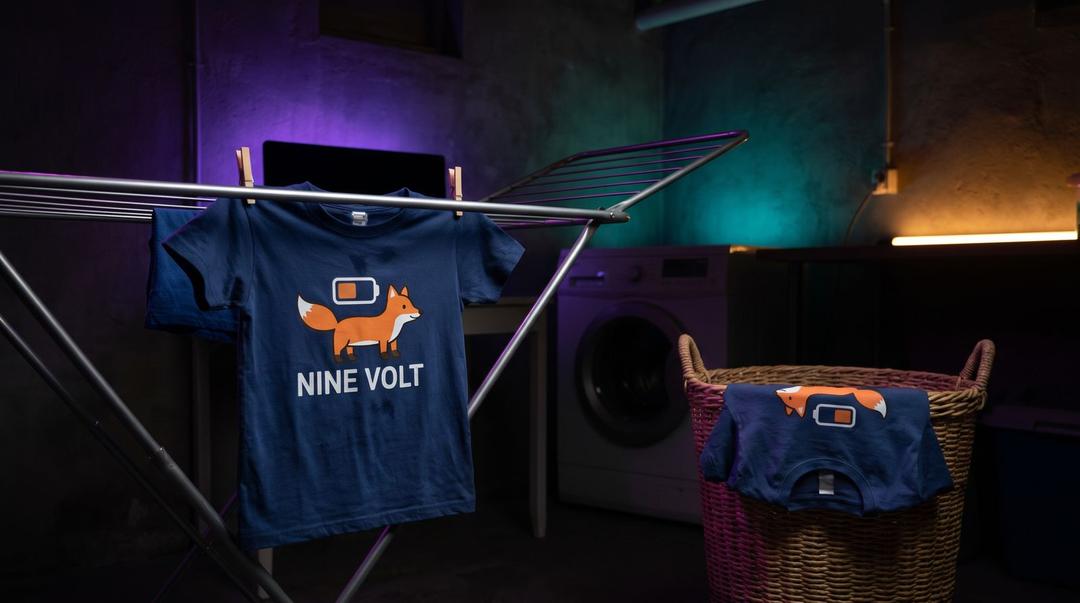
A parent decides in a few seconds whether the design is something they would put on their child. The ones that pass share a few habits.
- No faces, or only drawn ones. A photo of a child on a t-shirt is a product nobody else's child wants to wear. The mascot, the character, the hand-drawn version of the family: all fine.
- Readable at a glance. Big, simple shapes and a name a grandparent can read. A design that only makes sense if you have seen the episode works on the parent's mug, not the child's shirt.
- Nothing that dates in a month. The catchphrase of the week is a sticker, not a hoodie.
- No hidden adult joke. Some family channels put a wink in for the parents. Keep it on the parents' products; a child's shirt gets read out loud at school.
- Colours a child will wear. Ask them.
Order a sample of every children's product in the size your own children, nieces or nephews wear, wash it, and watch what happens to it over a week.
Selling Without the Merch Shelf
Without the shelf, comments or the Posts tab, the routes to the store are the ones YouTube leaves on and the ones outside it.
- The video description. The first line, before the fold, with a plain link to the store. It is the one place every viewer and every parent can click.
- The channel About page and banner links. Set the store as the channel's first link.
- The video itself. A short end segment, spoken and shown, telling parents where the store is.
- Parent-facing channels. The family's Instagram, Facebook or newsletter is where the buyer actually lives. Announce the drop there, with photos of real children wearing it only if the parents in question are you.
- A second, not-for-kids channel. Many family creators run a channel for the parents, with vlogs and behind-the-scenes content, where the full set of YouTube's tools is available. If you have one, that is where the merch shelf goes.
Before you launch, run our readiness check, which asks the questions above in order.
A Checklist Before You Launch
- The channel's audience setting is decided, and you know which YouTube features that leaves you.
- The kids' line is printed textiles, stickers, drinkware and paper, in the full youth size run.
- The supplier has confirmed, in writing, testing, certification and labelling for every youth product you list.
- Adult products pair with the kids' ones, and the jokes stay on the adult side.
- The store link is in the first line of every description and first on the About page.
- You have washed a sample of everything.
Merch for a family channel is merch for parents, worn by their children. Make the child's product simple and safe, make the parent's product worth buying, and put the link where the adult will find it.
FAQ
Can a made-for-kids YouTube channel sell merch?
Yes, but not through YouTube's own tools. YouTube's help pages say the merch shelf and the memberships join button are not available on content set as made for kids, so the store lives elsewhere and you point to it from the video description, the channel's About page and your parent-facing social accounts.
What merch sells best for a kids' channel?
Things a parent is happy to pay for and a child will use: youth t-shirts, stickers, water bottles, backpacks and a matching adult tee for the parent. The parent is the buyer, so the product has to look like something they would choose in a shop, not a joke they would not get.
Do children's merch products need safety testing?
In the US, a product designed or intended primarily for children twelve and under is a children's product, and the Consumer Product Safety Commission requires third-party testing, a written Children's Product Certificate and a permanent tracking label. Ask your print supplier which of its youth products are covered before you list them.
Keep reading
- Best Merch Platform for Kick Streamers: What Actually Works
Looking for the best merch platform for Kick streamers? We cut through the noise to show you which POD services actually work with Kick and how to set them up.
- Sustainable Streamer Merch: A Guide to Eco-Friendly Gear
Looking for sustainable streamer merch? Get the real talk on eco-friendly options, from organic cotton to made-to-order, and learn how to avoid greenwashing.
- How to Make Merch for Free: A Zero-Cost Setup for Small Creators
How to make merch for free as a small creator: free design tools and fonts, free mockups, a storefront with no monthly fee, where to sell it on Twitch and YouTube, and the costs that are not free.