how much do streamers make
How Much Do Streamers Make? Where Merch Fits In
What small streamers really earn from subs, Bits and ads, with Twitch's own numbers, and where a merch shop fits into that income without a big audience.
"How much do streamers make?" has two honest answers. The first is that a handful of people make millions. The second is that most streamers make close to nothing from the platform itself, and the platform's own rules explain why. This guide walks through where Twitch money actually comes from, what a 50-viewer channel can realistically expect, and where a merch shop fits into the picture, because for a small streamer it is often the one income line you fully control.
The Honest Answer First
Twitch has never published a salary table, but a 2021 leak of its payout records gave the clearest view anyone has had. In its analysis of that data, PC Gamer worked out that to earn the US median household income from Twitch payouts alone you needed to be among roughly the top 1,300 channels out of about 8.8 million active streamers, and that even the 1,000th biggest channel cleared around $85,000 a year; the figures, reported in October 2021, covered subs, ads and Bits, not sponsorships or merch. The data is old now, but nothing in the way Twitch pays out has changed the shape of it.
The entry rules tell the same story from the bottom up. According to Twitch's Affiliate page, you cannot earn a cent from subs, Bits or ads until you have 25 followers, have streamed on 4 different days for 4 hours in total, and have averaged 3 concurrent viewers on 4 of those days, all within the same 30-day window. Plenty of channels never get there. And once you do, Twitch's payout details page says nothing is paid until your balance reaches $50 by direct deposit, PayPal or check, or $100 by wire, with smaller balances rolling over month to month.
So for most new streamers the first real milestone is not an income. It is that first payout, and it can take months.
Where Twitch Money Actually Comes From
Three things pay on Twitch: subscriptions, Bits and ads. Each has a fixed share, and knowing them lets you do your own maths instead of guessing from someone else's highlight reel.
Subscriptions. Twitch's Earnings Analytics page states that the standard split is 50/50 after taxes, payment processing and currency conversion are taken off the top, and that because of local pricing a sub can cost a viewer anything from under $1 up to $5.99 depending on their country. That ceiling matters: a US Tier 1 sub puts under $3 in your pocket, and a sub from a lower-priced region puts far less.
The Plus Program. The better splits exist, but they are earned. Per Twitch's Plus Program page, Level 1 moves you to 60/40 once you hold 100 Plus Points or more for 3 consecutive months, Level 2 moves you to 70/30 at 300 Plus Points, and a Tier 1 sub counts as 1 point, Tier 2 as 2 and Tier 3 as 6; gift subs earn the better rate but do not count towards qualifying. In plain terms: 100 paid Tier 1 subscribers, three months running, before the first improvement.
Bits. Twitch's Partner page puts the streamer's share at 1 cent per Bit cheered. A 100-Bit cheer is a dollar to you. Bits are a lovely signal from chat, but very few channels see them in volume.
Ads. Ad revenue depends on how many ads you run, where your viewers are and what advertisers are paying that month, so there is no fixed rate to quote. For a small channel it is usually the smallest of the three lines.
If you stream on YouTube instead, the gate is higher: YouTube's Partner Program page requires 1,000 subscribers plus either 4,000 watch hours in the last 12 months or 10 million Shorts views in the last 90 days before any monetisation. And if your community supports you on Patreon, Patreon's pricing page lists a 10% platform fee plus payment processing and payout fees.
A Worked Example: The 50-Viewer Channel
The numbers below are an illustration with round figures, not a forecast. Picture a channel that averages 50 viewers, streams four nights a week and has built up 40 paid Tier 1 subs, most of them in the US.
At the top of that price range, those 40 subs gross about $240 a month. Processing and taxes come off first, then the 50/50 split, so the streamer's share lands a little under $120. Add a typical month of Bits, say 2,000 across all cheers, and that is another $20. Ads on a channel this size might add a similar amount or less. Call it $150 to $160 a month before the streamer's own income tax, for something like 60 to 70 hours live.
That is a real achievement, and it is also roughly $2.50 an hour. The Plus Program is still 60 paid subs away. This is the point where most streamers either decide the money does not matter, which is a perfectly good answer, or start looking for income that is not capped by Twitch's split. That is where merch comes in.
Where Merch Fits In
Merch changes the arithmetic in three ways.
The per-supporter number is bigger. Our Streamer Merch Price Benchmarks found that across named creators' own shops the middle price for a plain t-shirt was $30.99 from 31 creators and for a plain hoodie $53.49 from 22 creators. Compare that with the under-$3 a Tier 1 sub leaves you each month.
You keep most of it. As an illustration only, pull your own costs from your supplier's live catalog: if a hoodie sells at $53 and your print-on-demand cost for the blank, print and fulfilment comes to around $28, you keep about $25 on a storefront that charges no monthly fee. That one order is worth roughly eight months of a single Tier 1 sub. Our guide on how to price your streamer merch walks through the full margin calculation, including the platform cut and shipping.
Buyers do not have to be subscribers. Someone who watches twice a month and has never subbed will still buy a hoodie they like. Merch reaches the part of your audience that subs never touch, and nobody has to hit 100 Plus Points for you to sell it. The Twitch programs gate subs, Bits and ads, not your own store, which is why our Affiliate merch guide treats a shop as a day-one option rather than a reward for size.
Print-on-demand is what makes this possible at 50 viewers. Each item is made when it is ordered, so there is no box of unsold shirts and no money tied up in stock. The trade-off is a higher cost per unit than bulk printing, which is why the pricing matters.
What Merch Realistically Adds at Each Stage
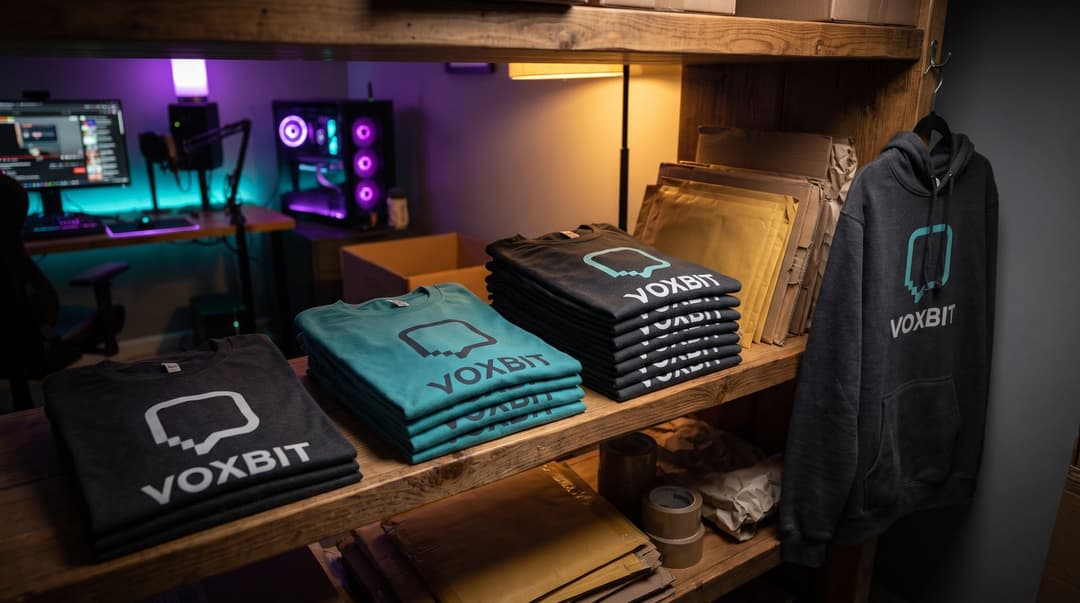
Be honest with yourself about scale, because merch follows the same curve as everything else.
- Under 10 average viewers. Expect a handful of orders from your most loyal regulars and friends, not an income. Launch one or two items so the shop exists, learn the process, and treat each sale as a signal. Our piece on how many followers you need to sell merch explains why engagement, not follower count, predicts the first orders.
- 10 to 50 average viewers. A small, regular trickle, often clustered around a drop or an event. This is the stage where one well-timed drop can pay out more than the month's subs, and where limited runs work better than a permanent catalog.
- 50 to 200 average viewers. Merch becomes a line you can plan around. Two or three drops a year, a core item that is always available, and a community that posts photos. At this size the question stops being "will anyone buy" and becomes "what do they want next".
None of these stages turns streaming into a job on its own. Put together, though, subs, a few Bits, a shop and the occasional sponsorship can make a hobby pay for itself and then some, and the shop is the piece that scales with enthusiasm rather than with Twitch's rules.
Mistakes That Make Merch Income Smaller Than It Should Be
- Pricing to match the cheapest shop you have seen. Undercutting your own margin to feel modest helps nobody. The benchmark middle prices above are what real creators charge, and fans expect to pay them.
- Launching ten items instead of one. Every extra product splits attention and orders. One hoodie that sells beats a page of things that do not.
- Never mentioning it. A merch panel below the stream is not a launch. A date, a short run and a reason to buy now move product; our guide on announcing a drop without killing the vibe covers the how.
- Forgetting it is taxable income. Merch profit is self-employment income in most countries, just like your Twitch payout. Our streamer taxes guide explains what to keep and when to worry.
What to Take From All This
Streaming income is real, it is just not where beginners expect it. Subs, Bits and ads arrive slowly, through gates Twitch controls, and split in Twitch's favour until you are big. Merch arrives one order at a time, from any viewer who likes you, on terms you set.
If you have a community that shows up, you already have what a shop needs. Pick one item people have asked for, price it against what other creators charge, and give it a date. The first order will tell you more about your audience than any revenue dashboard.
FAQ
How much does the average Twitch streamer make?
Very little. Most channels never reach the Affiliate threshold, and among those that do earn something, the leaked 2021 payout data showed the money concentrated in a tiny group at the top. A small streamer's realistic first goal is the $50 payout minimum, not a salary.
Can merch make more than subs for a small streamer?
Often, yes, per supporter. One hoodie sale can clear more than a Tier 1 sub pays you in several months, and buyers do not need to be subscribers. It will not replace a job either, but it is the income stream you control.
Do I need to be an Affiliate before I sell merch?
No. Twitch's programs gate subs, Bits and ads, not what you sell on your own store. A print-on-demand shop works from day one with no stock, so merch is usually the first money a streamer can actually make.
Keep reading
- Custom Playmats: The Perfect Merch for TCG & Tabletop Streamers
Thinking about merch for your TCG or tabletop stream? A custom playmat is a perfect fit. Here’s a no-BS guide on how to design, print, and sell one your community will love.
- TikTok Shop for Streamers: Is It Worth the Grind?
Thinking about how to sell merch on TikTok for your stream? Here’s a no-BS guide on whether it's worth it and the steps to get your first drop live.
- Best Merch Platform for Kick Streamers: What Actually Works
Looking for the best merch platform for Kick streamers? We cut through the noise to show you which POD services actually work with Kick and how to set them up.