custom playmat
Custom Playmats: The Perfect Merch for TCG & Tabletop Streamers
Thinking about merch for your TCG or tabletop stream? A custom playmat is a perfect fit. Here’s a no-BS guide on how to design, print, and sell one your community will love.
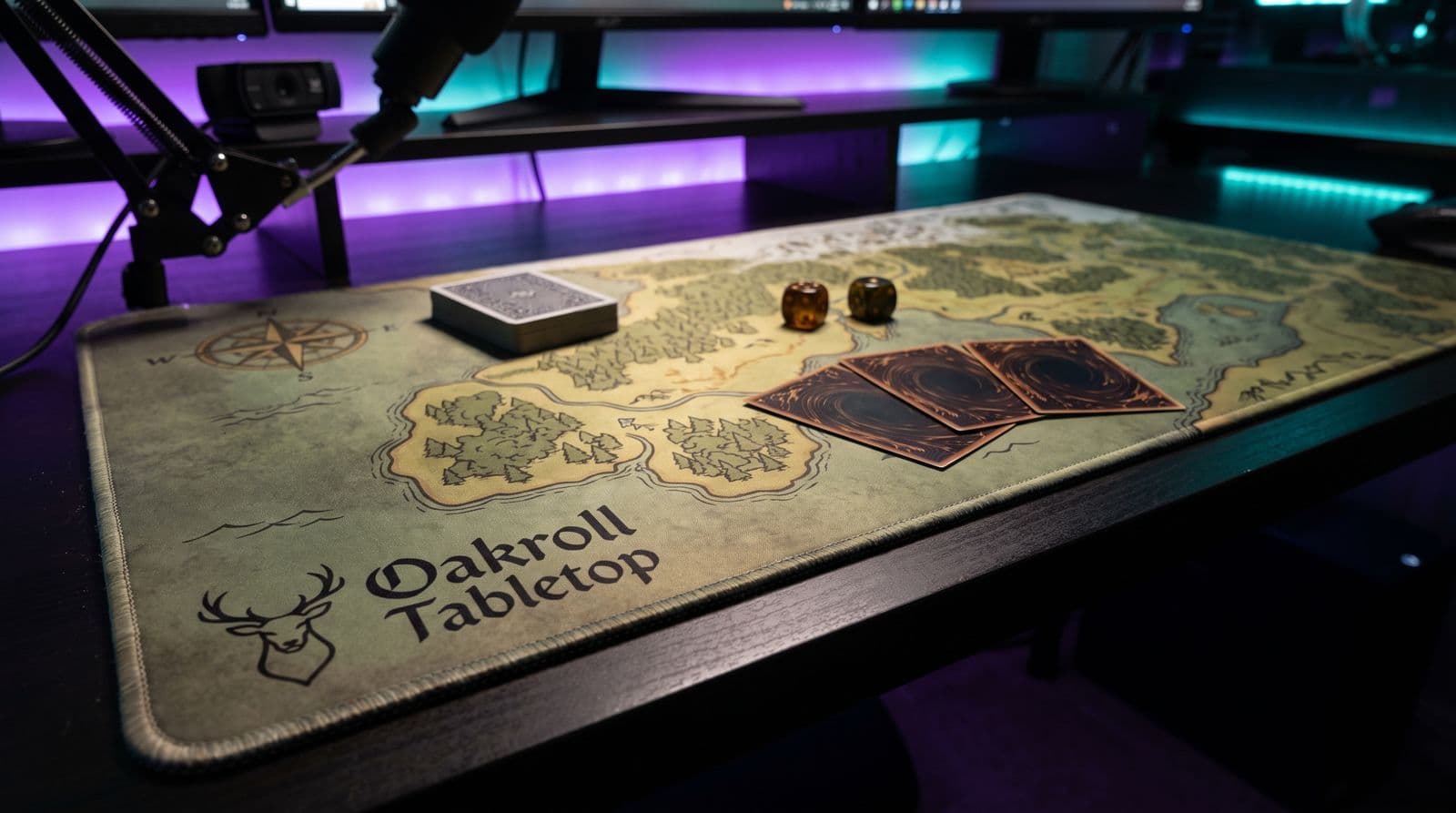
Okay, let’s talk merch. Most guides will tell you to slap your logo on a t-shirt and call it a day. And look, I’ve sold a t-shirt. I’ve probably bought a dozen. But if you’re a TCG or tabletop streamer, a shirt is just... fine.
There’s a much better option. Something that isn’t just an ad for your channel, but a piece of gear your community will actually use. I’m talking about custom playmats.
A good playmat is something your viewers will put on their own desk for their own games. It’s part of the hobby. It’s the perfect merch for our niche. So let’s skip the theory and get right into it. I’m going to walk you through why this works, how to design one that doesn’t suck, how to get it made with zero risk, and how to sell it to your chat without feeling slimy.
Why Playmats Are a Genius Merch Idea for Your Stream
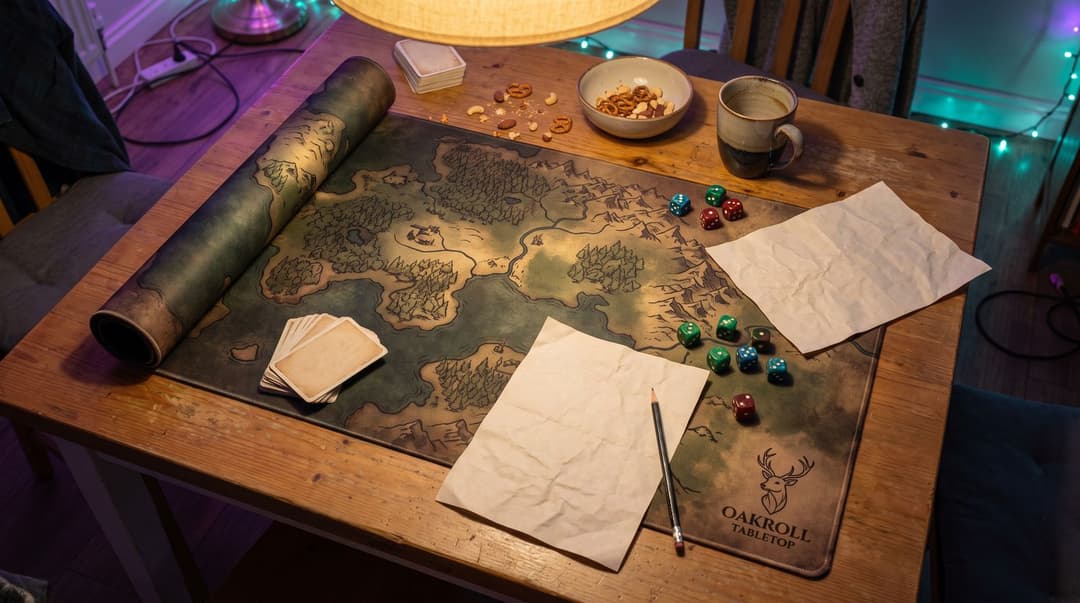
Your first merch drop feels like a big deal, and it’s easy to default to what everyone else does. But for TCG and tabletop streamer merch, a playmat just hits different. Here’s why it’s a smarter choice than another black hoodie.
It’s Gear, Not Just Merch
Think about it. A t-shirt gets worn maybe once a week, if you’re lucky. A hoodie is for cold weather. A playmat? That lives on the desk. It’s the surface they use for their own Friday Night Magic, their D&D one-shots, or their board game nights. It becomes part of their personal gaming setup. It’s a tool, a piece of equipment that they interact with constantly. You’re not just selling them a logo; you’re giving them something useful for the hobby you both love.
High Perceived Value
Let’s be real, anyone can get a t-shirt printed. But a custom, high-quality playmat feels more specialized and premium. It has a nice weight, a smooth surface, and a non-slip back. Because it feels like a substantial piece of kit, you can price it accordingly. Your community won’t see it as a cheap cash-grab. They’ll see it as a cool, unique item they can’t get anywhere else, which makes them feel like they got something special. My first playmat sale got a better reaction than any shirt I ever sold.
It’s a Team Jersey
Every time a viewer lays down their cards or rolls their dice on your mat, they see your brand. It’s not just passive advertising; it’s a constant, subtle reminder of the community they’re part of. When they see someone else with the same mat at a local game store, it’s an instant connection. It’s less like a billboard and more like a jersey for your stream’s team. It quietly strengthens that community bond every single time it’s used.
Designing a Playmat People Actually Want to Use
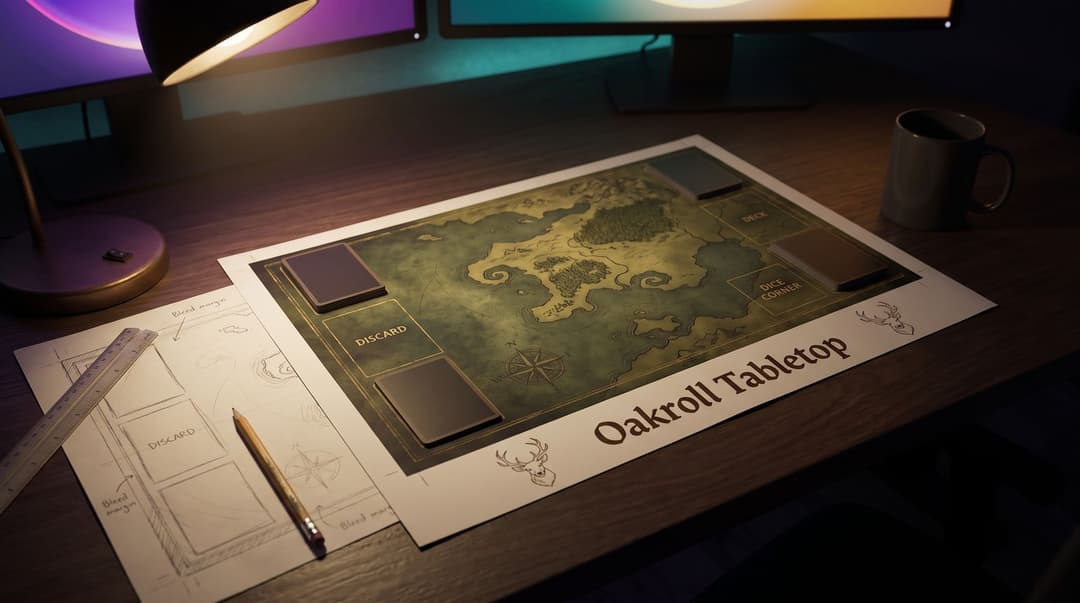
This is the fun part, but it’s also where people mess up. A great playmat design is more than just sticking your logo in the middle of a rectangle. You need to think like a player first and a streamer second.
Create Something Functional
Before you even think about art, think about use. Will people be playing a TCG on it? Maybe add subtle, stylized zones for a deck, discard pile, and different card types. Playing a TTRPG? Maybe it includes a cool-looking HP tracker or a spot for dice. The design should complement the game, not distract from it. A busy, chaotic design can make it hard to see the cards. Create a design that’s functional first, cool second.
Inside Jokes Beat Big Logos
Your biggest fans aren’t buying merch to be a walking advertisement for you. They’re buying it to show they’re part of the club. The best designs feel like an inside joke. Use a community catchphrase, a beloved emote, or art that references a legendary moment from a campaign. Maybe it’s a silly doodle your mods always spam. That deep cut will mean the world to your core community and make the playmat feel like a secret handshake. This goes way beyond just your logo; we’ve got a whole guide on how to design merch fans will actually want to wear if you want to go deeper.
The Boring (But Crucial) Tech Specs
This part is non-negotiable. If you get this wrong, your playmat will look blurry and cheap.
- Resolution: Your art file needs to be high resolution. The standard for print is 300 DPI (Dots Per Inch). Anything less will look pixelated. You can find general guidelines on image resolution to understand the basics, but always use your printer’s own templates.
- Dimensions & Bleed: Playmats come in specific sizes. Your printer will provide a template. You MUST design to that template, including the “bleed area” around the edges. This extra margin ensures your design goes all the way to the edge after it’s cut. A standard TCG playmat is 24″ × 14″; print-on-demand services usually sell the same thing as a large gaming mouse pad, often 36″ × 18″, so check the exact dimensions on the product page before you start.
- Color Mode: Your screen uses RGB color. Printers use CMYK. Even so, keep your file in RGB, specifically sRGB: print-on-demand services ask for sRGB and convert to CMYK themselves, and a CMYK file can come out with shifted colors. Expect very bright neon tones to print slightly duller than they look on screen. Printful’s file guide explains why.
One last thing on art: don’t use characters, symbols, or logos you don’t own. Stealing art from a game you stream is a fast track to trouble. You can read up on the basics with the U.S. Copyright Office information on fair use to be safe.
How to Get Your Custom Playmat Made (Without Buying 500 Upfront)
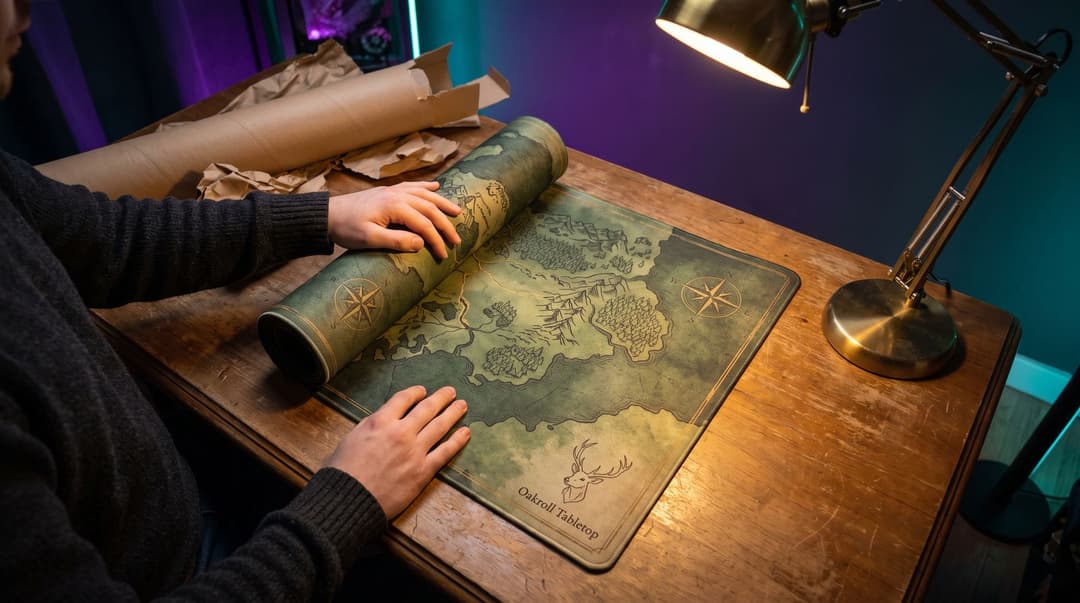
Alright, you’ve got a killer design. Now, how do you turn that PNG file into a real thing without remortgaging your house? The answer is print-on-demand.
Print-on-Demand (POD) is Your Starting Zone
Here’s how it works: you partner with a print-on-demand company. You upload your design, set a price, and connect it to your online store. That’s it. You hold zero inventory. There are no upfront costs besides what you paid for the design itself.
When someone in your chat buys the playmat, the order goes directly to the POD company. They print it, pack it, and ship it straight to your viewer. You get a cut of the sale. It’s magic. Services like Printful let you list a large gaming mouse pad, which is what a playmat is in POD terms, in your shop, and they only print and ship one when someone actually buys it. This is, without a doubt, the best way to start with merch. It’s zero risk.
Avoid the “Bulk Order” Final Boss
The other option is bulk ordering. This is where you pay a factory upfront to print, say, 200 playmats. Sure, the per-item cost is lower, but the risk is massive. You have to guess how many to order. You have to pay thousands of dollars before you’ve made a single sale. And then, a giant box of 200 playmats shows up at your door, and you have to store them, pack them, and ship every single order yourself. I still have a box of medium shirts from 2023 in my closet that proves this is a bad idea for your first run. Think of bulk ordering as the final boss of merch. You can tackle it later, once you have sales data and know exactly what people want. For now, stick to the print-on-demand starting zone.
Seriously, Order a Sample First
Before you even whisper the word “merch” to your chat, buy one for yourself. This is the most important step. When it arrives, check everything. Is the print sharp? Are the colors accurate? How does the material feel? Does it slide around on your desk? Use it on stream for a week. See how it looks on camera. There is nothing worse than launching a drop and then finding out the quality isn’t what you promised. A sample lets you vouch for the product honestly because you’ve actually used it.
Selling Your Playmat: The Low-Pressure Launch Plan
You’ve got a great design and a solid print partner. Now it’s time to sell it, but you want to do it without killing the vibe of your stream. No one likes a hard sell. Here’s how to launch it in a way that feels authentic.
Tease, Don’t Just Announce
Remember that sample you ordered? Start using it on stream. Just have it on your desk while you play. Don’t say anything about it. Let it sit there in your VODs. Inevitably, your chat will notice. Someone will ask, “Hey, what’s that new playmat?” This is your opening. You can casually say, “Oh this? Just something I was messing with.” Let the community’s curiosity build naturally. This is so much more effective than a sudden, loud “MERCH FOR SALE” announcement. It makes them feel like they’re in on a secret.
Make it a Community Event
Instead of just a random Tuesday drop, tie the launch to a community milestone. Maybe it’s a sub goal reward (“If we hit 200 subs, the playmat shop goes live!”). Maybe you launch it during a special charity stream, with a portion of the proceeds going to the cause. Or you could do a special one-shot TTRPG campaign where the playmat’s design is revealed as part of the story. Framing the launch as a celebration or a shared goal makes buying it feel like participating in a community win, not just a transaction.
Put the Link Everywhere (But Be Cool About It)
Once it’s live, make it easy to find.
- Add the shop link to a Twitch panel below your stream. Give it a nice graphic.
- Create a simple chatbot command like
!playmator!merchthat your mods can use. - Post the announcement in your Discord, your Twitter, and on your YouTube community tab.
The key is to make the information available, not to spam it. A timed bot message every 30 minutes is fine. Mentioning it once at the start of the stream and once near the end is also good. Just don’t guilt-trip your chat or beg for sales. Be proud of what you made, show it off, and let people who want it find it. If you want the panel done right, we have a whole guide to setting up a Twitch panel merch link.
Conclusion
So, that’s the whole play. Most streamer merch is forgettable, but a custom playmat for a TCG or tabletop community is different. It’s not just a logo; it’s a piece of gear that connects you to your audience in a way a shirt never could.
Just remember the basics. Design something functional that you and your chat would genuinely be excited to use. Start smart and safe with print-on-demand to avoid turning your bedroom into a warehouse. And when you launch, make it a celebration for the community you’ve built together.
You don’t need a massive audience for this to work. You just need a small, dedicated group that shares your passion for the game. Good luck with the drop. I know you’ll make something awesome.
FAQ
What's a good price for a custom playmat?
Look at the base cost from your print-on-demand provider, which includes the item and printing. Add the average shipping cost, then add your profit margin. Aim for a final price that feels fair and is in line with what other quality playmats sell for online.
What file format and resolution do I need for my art?
The industry standard for quality printing is 300 DPI (Dots Per Inch). For the file format, a high-quality PNG or TIFF is usually best. However, you must always download and use the specific design template from your chosen printing service, as their requirements can vary.
Are there different types of playmat surfaces?
Most playmats have a soft, cloth top for smooth card movement and a non-slip rubber bottom. Some premium versions also offer stitched edges to prevent fraying. Check the product description on the print-on-demand site and order a sample to see and feel the quality for yourself before selling.
Keep reading
- A Creator’s Guide to Custom Acrylic Merch
Ready to make your first merch drop? Learn how to design and sell custom keychains, charms, and standees that your community will actually love and collect.
- Custom Desk Mats for Streamer Merch: The Full Guide
Thinking about a custom desk mat for your streamer merch? This is the complete guide to design, finding a printer, and setting a price your community will love.
- TikTok Shop for Streamers: Is It Worth the Grind?
Thinking about how to sell merch on TikTok for your stream? Here’s a no-BS guide on whether it's worth it and the steps to get your first drop live.