why is merch so expensive
Your Merch Is Too Expensive: How to Explain Your Prices to Chat
Why creator merch costs more than a shop tee, what a single print-on-demand hoodie actually costs to make and ship, and the short, honest lines that answer 'too expensive' in chat without apologising.
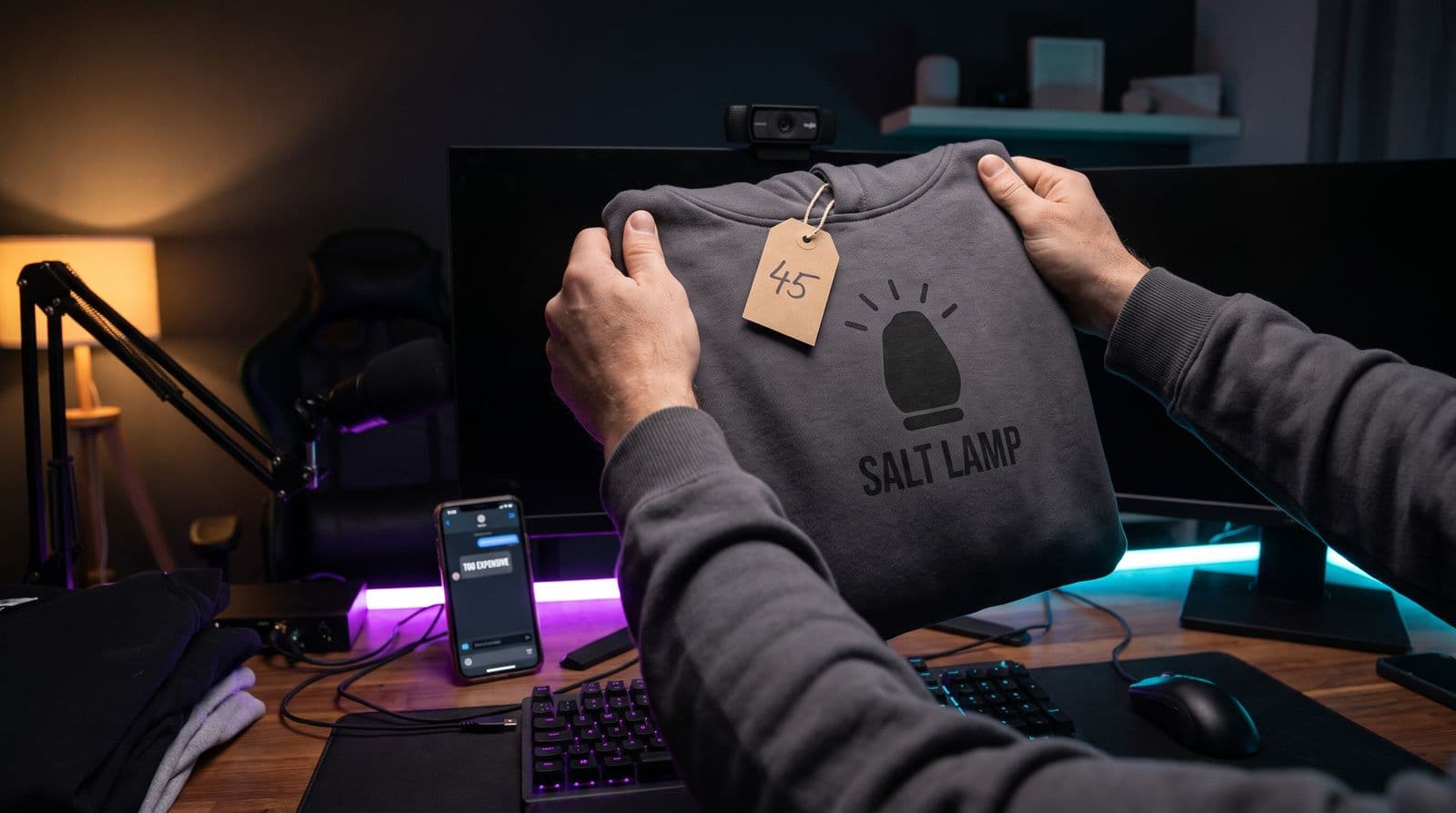
It arrives within a minute of the store link going up. "Forty dollars for a hoodie?" "I can get that at Target for fifteen." "Why is merch so expensive?" Sometimes it is a genuine question and sometimes it is a troll, and the answer to both is the same: a short, true explanation that you give once and do not apologise for. This guide covers why creator merch costs what it does, what a single hoodie actually costs to make and send, how to explain it on stream, what never to say, and the cases where chat is right and the price really is wrong.
Why the Complaint Happens
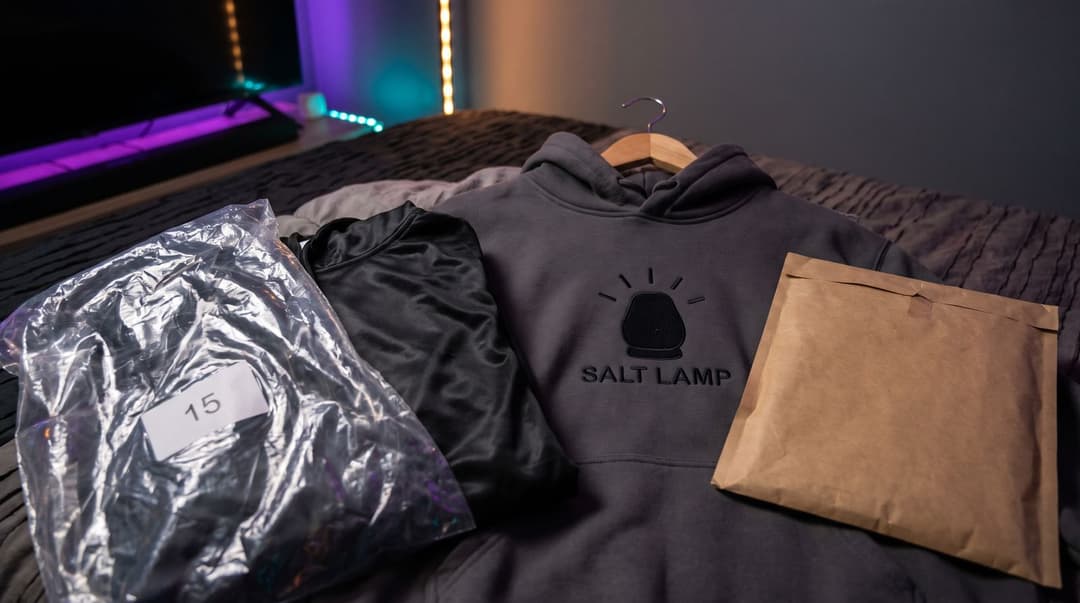
Chat is comparing your hoodie to the cheapest hoodie it has ever seen, and the comparison is unfair in three ways that nobody in chat can see.
- Scale. A big-box hoodie is made in a run of tens of thousands, in a factory that negotiates the fabric by the tonne, and shipped by the container. Your hoodie is made in a run of one.
- Timing. The shop hoodie was made months ago and is sitting in a warehouse. Yours does not exist until someone orders it, which is what keeps you from owning a garage full of unsold mediums.
- Who gets paid. The shop price pays a factory and a retailer. Your price pays a printer, a platform, a payment processor, a courier, sometimes an artist, and then you. Chat only sees the last one.
None of that is an excuse. It is just the arithmetic, and most fans accept it the moment they hear it. That is not a hunch: in Kahneman, Knetsch and Thaler's study of price fairness, people judged a price acceptable when it covered a seller's real costs and unfair when it did not, which is exactly the distinction chat is making when it compares your hoodie to a shop one.
What a Creator Hoodie Actually Costs
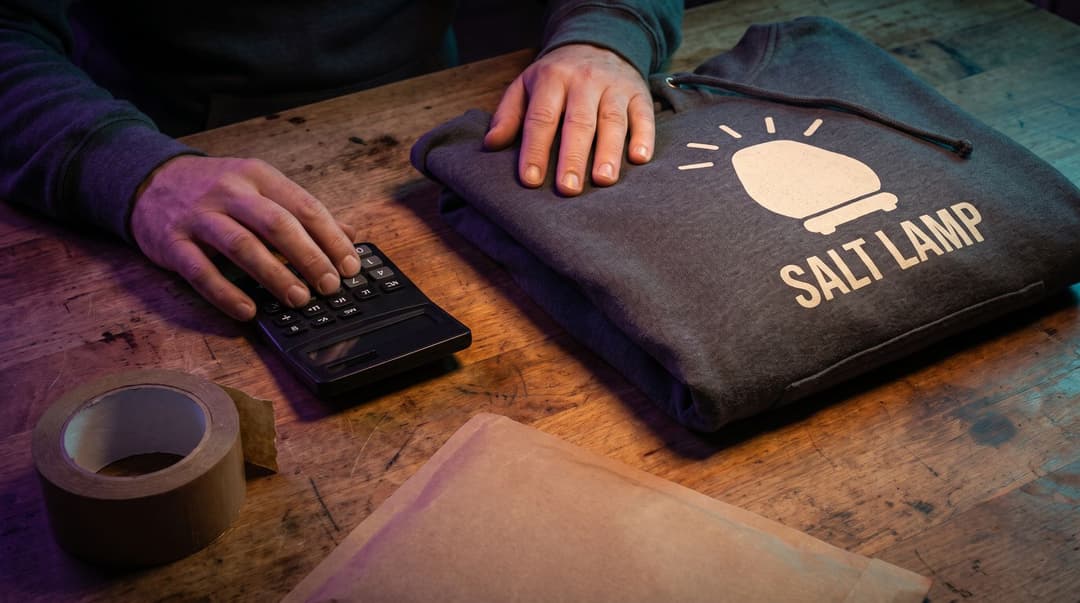
Here is the sum, as an illustration using one supplier's published prices; your blank, printer and market will move every number. Printful's hoodie catalog lists a plain Gildan 18500 hoodie at $22.63 before shipping, and its shipping page lists a flat US rate of $8.79 for the first hoodie in an order. So the hoodie costs about $31 to make and deliver before you have earned anything, before your store's payment fee, and before any artist you paid for the design. Price it at $40 and your share is a few dollars. Price it at $45 and you have a margin that survives a reprint or a lost parcel.
A tee is the same shape with smaller numbers: a blank plus a print, plus a few dollars of postage, plus fees, plus your cut. Our pricing guide walks through the formula with your own figures, and our price benchmarks show where other creators have landed, so you can tell chat, truthfully, that your hoodie is priced like everyone else's.
The point of knowing the sum is not to recite it on stream. It is so that when someone says "forty dollars", you are not guessing whether they have a point.
How to Explain It on Stream

Four rules, then the lines.
- Answer once. The first time the complaint comes up, give the short version. After that, point at the command or the pinned message. Re-explaining every stream turns a price into a controversy.
- Do not apologise. "I know it's a lot, sorry" tells chat the price is wrong. "It's made to order, that's what it costs" tells chat the price is a fact.
- Say what it is. Name the garment. "It's a heavyweight hoodie, printed when you order it, shipped from the printer." Most "too expensive" comments assume a thin promotional tee.
- Say who gets paid, if you are comfortable. "The printer gets most of it, the platform takes its cut, I make a few dollars a hoodie" is disarming because it is true and because nobody expected you to say it. It also sells: in Mohan, Buell and John's cost transparency experiments, published in Marketing Science, showing customers what a product cost to make raised their willingness to buy, because it read as a sign of trust rather than a markup.
The lines, in roughly increasing length. Pick one and make it yours.
- The one-liner. "It's made to order, one at a time. That's what a hoodie costs when nobody's making ten thousand of them."
- The honest cut. "The printer and shipping are most of it. I make a few bucks on each one. If you want to support the stream cheaper, the sub button's right there."
- The comparison. "A shop hoodie is made by the container in a factory. This one gets printed when you order it. Different thing, different price."
- The shrug. "It's not cheap and it's not meant to be. It's a hoodie for people who want one. Totally fine if that's not you."
- The redirect. "Hoodie's the expensive one. There's a sticker and a tee if you want in for less."
Put the one you choose in a chat command, so mods can answer without you. Our guide to showing merch on stream covers the setup, and the same line belongs on the product page under the price, where the people who never watch live will read it.
The product page version can be a little longer, because nobody is reading it live. Two or three sentences under the price: what the garment is, that it is printed to order and shipped from the printer, and roughly how long that takes. A fan who has read that before clicking buy does not come back to chat to complain. A fan who has not read it, because it was not there, will.
What Not to Say
- "I need to make a living." True, and the worst possible answer, because it turns a product into a guilt trip. The hoodie should sell on being a good hoodie.
- "Printful / Printify charges me X." Chat does not know or care who your supplier is, and naming them invites a hundred people to look up the base price and do the sum wrong.
- "It's cheaper than other streamers' merch." It may be, but you have just started a comparison you cannot win against everyone.
- "Fine, I'll do a discount." Not live, not under pressure. Discounts are planned, announced and limited, or they are the new price.
- Nothing at all. Ignoring it works for trolls and fails for genuine askers, who read silence as "no good answer".
When Chat Is Right
Sometimes the price really is wrong, and the complaint is useful. Four signs.
- The blank is thin. If your hoodie is a lightweight, budget blank priced like a heavyweight, chat has a point. Order a sample and feel it.
- The design is only a logo. A plain logo tee at a premium price is a hard sell to anyone outside your most devoted fans. Lead with a reference or a phrase.
- There is no reason attached. A limited colour, a milestone, a charity cut, a numbered run. Price with a story is accepted; price alone is questioned.
- Your margin is larger than the printer's. If most of the price is your cut, you are not selling merch at merch prices, and the fans who do the sum will notice.
If one of those is true, fix the product or the price before the next drop. If none of them is, keep the price and stop discussing it.
Give Them a Cheaper Way In
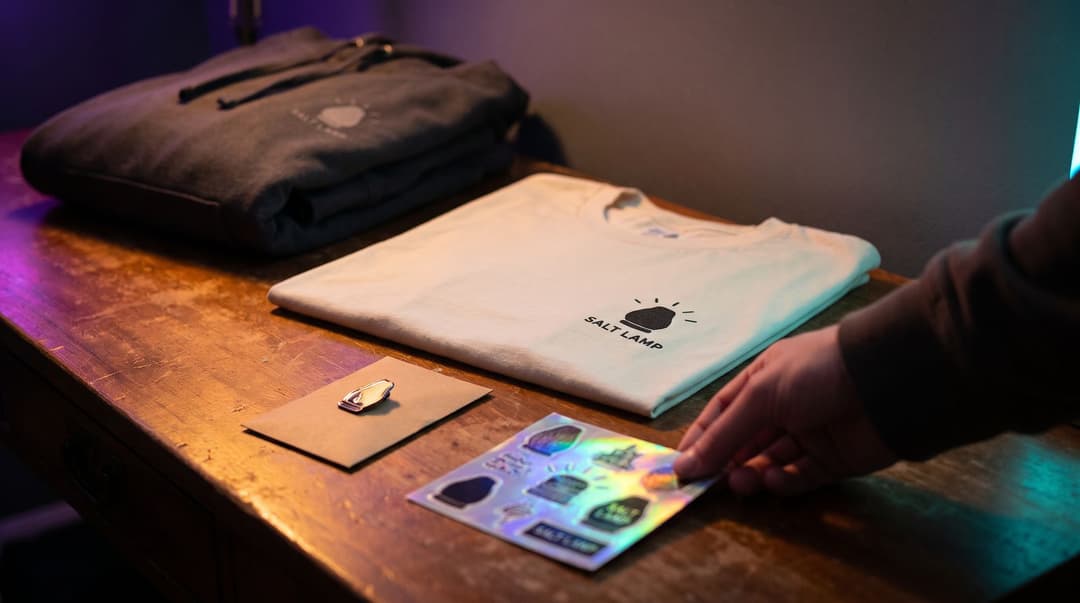
The best answer to "too expensive" is a product that is not. A sticker, a pin or a basic tee at a price nobody argues with lets the fan who cannot afford a hoodie still belong, and takes the heat off the hoodie. Our guide to products beyond t-shirts has the full range, stickers and pins included. When the redirect line is true, "there's a sticker if you want in for less", the complaint usually ends there.
The Short Version
Creator merch is expensive because it is made one at a time and several people are paid before you are. Know the sum for your own products so you can answer with facts, answer once and without apologising, put the line in a command and on the product page, never justify a price with your rent, and listen when the complaint is really about a thin blank or a plain logo. Then add a cheaper item so that nobody who wants in is kept out, and get back to the stream.
FAQ
Why is creator merch so expensive?
Because it is made one at a time. A shop tee is printed by the thousand in a factory and shipped by the pallet; a creator tee is printed when you order it, on a blank the printer buys at retail-ish prices, shipped on its own in its own bag. Add the platform's cut, the payment fee, the artist if there was one, and the creator's own margin, and the price is where it is.
How do I respond when chat says my merch is too expensive?
Once, briefly, without apologising. Say what the shirt is, say that it is made to order rather than stocked, say what your cut is if you are comfortable, and move on. A pinned command or a line on the product page does the rest. Arguing with chat about it on stream makes the price look like a problem.
Should I lower my merch prices if people complain?
Only if the complaint is right. If the blank is thin, the design is a plain logo, or the price has no reason attached, the fix is the product, not the number. If the product is good and the price covers its real cost plus a fair margin, keep it and add a cheaper item for the fans who want in at a lower price.
Keep reading
- How to Show Merch Sales on Stream: Alerts, Overlays and Chat Commands
Set up a merch alert that fires when someone buys, build an overlay that sells without cluttering your stream, and add a !merch chat command. Fourthwall, Streamlabs and StreamElements covered.
- Do Fans Actually Buy Creator Merch? Why They Buy (and Why They Don't)
Why fans buy creator merch, why most of them don't, and what the gap between 'take my money' in chat and real orders means for how you design, price and launch your next drop.
- Merch for Faceless Creators: A Brand Fans Wear Without Your Face
How to build merch for a faceless YouTube channel or stream: the brand assets that replace a face, merch ideas for voice, mascot and explainer channels, and how to sell it without appearing on camera.