custom lanyards
Custom Lanyards: A Streamer's Guide for Cons & Meetups
Thinking about custom lanyards for your next con, meetup, or mod team gift? Here’s a no-BS guide on how to design and order them without breaking the bank.
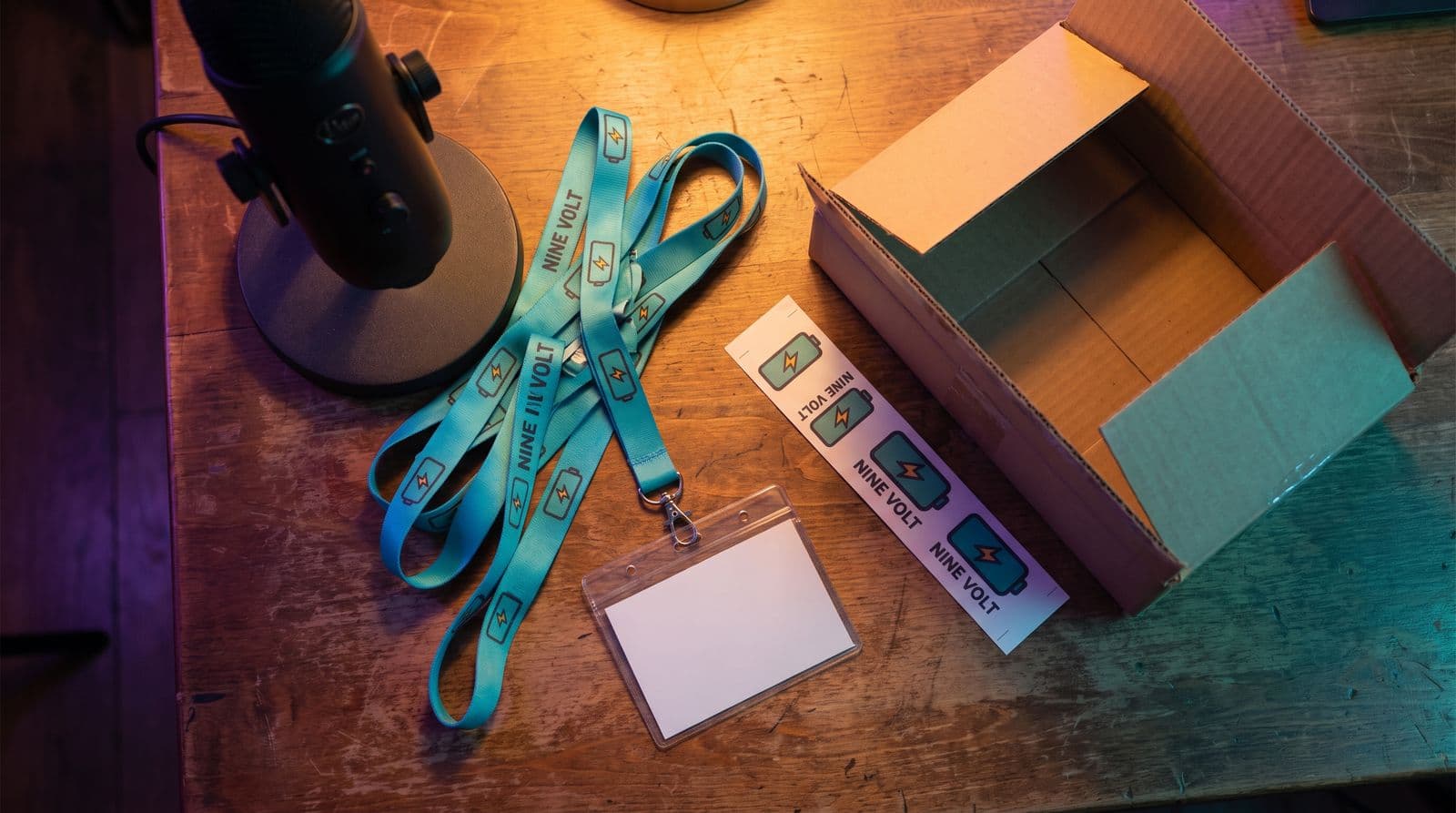
You walk into a convention hall, and what do you see? A thousand people, a hundred booths, and about five thousand lanyards. It’s easy to think they’re just for the event staff or big brands with big budgets.
Here’s the honest truth: custom lanyards are one of the most useful, low-cost tools for a growing creator doing anything IRL. This isn’t about launching a hot new merch item that’ll fund your next PC upgrade. Sorry to break it to you.
This is about a practical tool for gathering your community, rewarding your team, and making your first real-world events feel official and run smoothly. This guide walks through why you might actually want one, how to design it so it doesn’t look like a corporate freebie, and where to get them made without ending up with a dusty box of 500 in your closet.
Why Bother With Lanyards? (It’s Not Just for Sales)
Let’s be real, you’re not going to get rich selling lanyards. Their value is in community management, not your bank account. Think of them as a team jersey for your community, not another product on your merch shelf.
Here’s where they shine:
-
Conventions and meetups. Imagine trying to find your people in the chaos of a PAX or TwitchCon floor. It’s a nightmare. A brightly colored custom lanyard turns that chaos into a game of spotting friends in the wild. It’s a secret handshake people wear around their necks. When someone from your chat sees another person wearing it, they have an instant connection. That physical symbol of belonging is a powerful thing when you’re turning online friends into IRL ones.
-
Your mod team. Your mods are volunteers who put in the work to keep your chat a good place to be. A lanyard is a great gift for them. It’s more practical than a shirt they might not wear every day, and it feels official. If your mods are helping you at a booth or running a meetup, it instantly identifies them as part of the team. It’s a small way to say “thank you” and “you are a crucial part of this.” It’s a piece of gear, and that feels good. Pair it with a custom enamel pin and you have a proper team kit.
-
Small-scale event management. Planning your first ticketed community meetup? Lanyards are your credentials. Hand them out at the door to show who’s supposed to be there. You can even use different colors for different access levels: green for general admission, a handful of gold ones for VIPs who get a free drink ticket or a meet-and-greet. It’s a simple, visual way to run your event without checking a list on your phone all night.
Designing a Lanyard That Doesn’t Suck
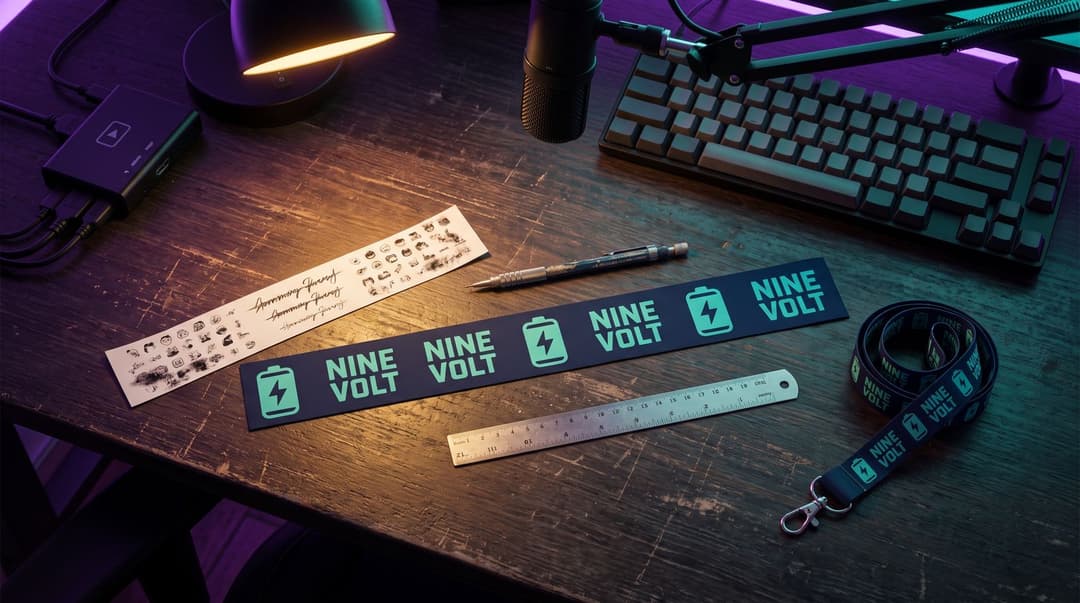
Most event lanyards are boring. Black, blue, a corporate logo nobody cares about. Yours doesn’t have to be. The goal is something your community is actually happy to wear, so focus on clean and recognizable.
-
Clarity over clutter. This is the most important rule. Make it readable from a distance. Your channel name, logo, or a key community phrase should be legible from at least five feet away. Use a thick, clean font. That cool, scratchy script font you love? It’s going to look like a blurry smudge printed on fabric. Simple and bold always wins. One great logo or one clear phrase beats cramming every emote you have onto it.
-
The repeat pattern. Most lanyards aren’t one giant, continuous design. They’re a short pattern repeated over and over. When you get a template from a supplier, lay out your design elements in a single block: your logo, a bit of space, your channel name, another bit of space. That block is duplicated along the length of the lanyard. Don’t overthink it; a simple, clean repeat is what you’re going for.
-
Color and contrast. High contrast is your best friend. Use colors that pop against each other, dark text on a light lanyard or bright text on a dark one. If you want your community to spot each other easily, pick a bright, unmissable color that stands out from the sea of standard-issue black. Think about your brand colors, then pick the most vibrant combination. The same ideas that make a great t-shirt apply here; for a deeper dive, see our guide on how to design merch fans actually want to wear.
The Tech Specs: What to Actually Order
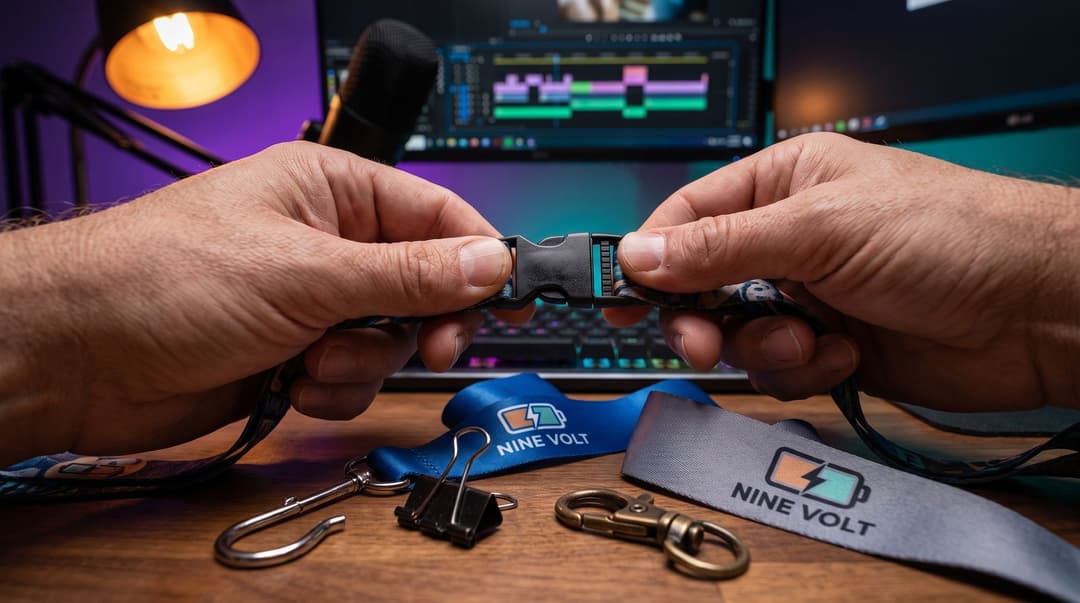
When you get to an order page, you’ll see a row of dropdowns with confusing terms. Don’t panic. You only need to know a few things to make the right choice.
-
Material: polyester vs. nylon.
- Polyester is the workhorse and what you’ll probably want. It’s durable and made for dye sublimation, which prints detailed, full-color designs (emotes, gradients) right into the fabric. It’s the best all-around choice.
- Nylon is a little shinier and feels a bit more premium. It suits simple, screen-printed logos in one or two colors. A good option, but polyester is more versatile for a streamer’s branding.
My advice: start with polyester.
-
Attachments: hooks and clips. This is the metal bit at the end that holds the badge. The common ones:
- J-hook: the standard, simple hook. Works for almost anything.
- Bulldog clip: a flat clip that pinches onto a badge. Good for flat plastic credentials.
- Lobster claw: a swiveling clasp that’s a bit more secure than a J-hook.
My advice: a J-hook or lobster claw is a safe bet.
-
The safety breakaway: a must-have. This is non-negotiable. Get the safety breakaway. It’s a small plastic clasp at the back of the neck that snaps apart if the lanyard gets caught on something, so nobody gets hurt. It’s a tiny extra cost. It also makes the badge rule at big shows painless to live with: PAX East’s safety policy, for example, requires everyone to wear their show badge at all times, and a comfortable breakaway lanyard is how people actually manage that for three days straight. Don’t skip it.
Where to Get Custom Lanyards Made (and How Much)
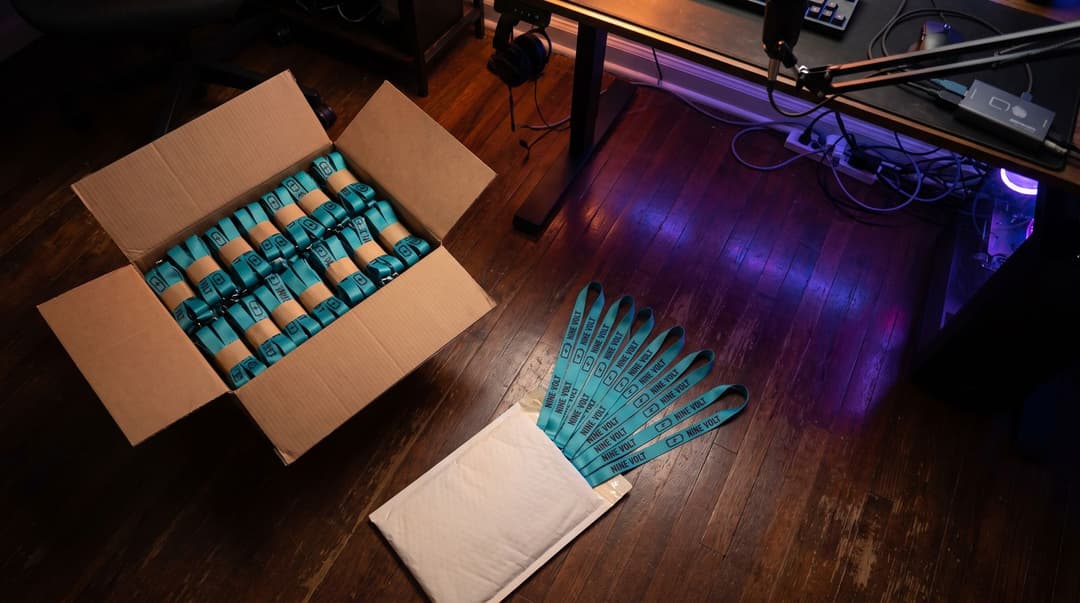
You’ve got a design and you know the specs. Now where do you buy them? Two main paths, and the right one depends entirely on how many you need.
-
Bulk suppliers. This is the traditional route. Promotional-product companies print a large quantity at a low price per item, with a minimum order that is usually 100. It’s the best option when you’re buying for a specific event and know how many attendees or team members you need to cover.
The cost per lanyard is low. At 4imprint, checked in October 2026, basic polyester, nylon and full-color dye-sublimated lanyards list from about $1.70 to $4.45 each, all with a 100-piece minimum, and the price moves with width, print method and clip. The downside: you pay for all 100 upfront and store them yourself.
-
Small runs and single pieces. Here’s a catch that trips people up: the big print-on-demand platforms built for apparel mostly don’t carry lanyards, so the usual “order one, sell one” route doesn’t apply. Instead, look at promo printers with low or no minimums. Rush Order Tees, for instance, lists several nylon, polyester and full-color lanyard styles with no minimum, checked in October 2026, and Custom Ink flags low-minimum options on its lanyard pages. Expect to pay several times the bulk per-piece price, which is fine when you only need ten for your mods or a couple to check the colors before a bigger order.
Whichever route you take, order one first. Check the print sharpness, feel the fabric, and test the breakaway. A lanyard is cheap, but a box of 100 with a blurry logo is not.
Your Community, In Real Life
So, that’s the whole grind. Custom lanyards aren’t a secret path to merch riches. They’re a practical tool for building your community in the real world. A good lanyard makes your people feel like they’re part of a team.
Remember the key takeaways: design for clarity from across a room, always get the safety breakaway, and choose a supplier based on your actual need. Don’t order 100 if you only need 10 for your mods. Start small, serve your community first, and focus on making your next IRL event feel a little more connected for everyone there. Now go plan that meetup.
FAQ
What’s a good minimum order for lanyards?
Promotional suppliers usually start at 100 units. A few printers list lanyard styles with no minimum, so you can get a handful for your mod team without a box of spares.
How much do custom lanyards cost per piece?
At promo suppliers, a basic polyester or full-color lanyard runs roughly two to four dollars each at 100 units, depending on width, print method and clip. Single or small-run orders cost several times that per piece.
Do I really need a safety breakaway clasp?
Yes. For any event where it could get snagged, it is a basic safety feature, and it costs very little to add.
Can I print a full-color photo or gradient on a lanyard?
Yes. Choose dye sublimation on a polyester lanyard and you can print complex, full-color designs, including emotes and gradients.
Keep reading
- Custom Desk Mats for Streamer Merch: The Full Guide
Thinking about a custom desk mat for your streamer merch? This is the complete guide to design, finding a printer, and setting a price your community will love.
- Custom Enamel Pins: A Streamer's Guide to Getting Them Made
Ready to make custom enamel pins for your stream? This guide breaks down everything from design and costs to finding manufacturers, with options for any budget.
- Streamer Hoodie Ideas That Actually Sell
Looking for hoodie design ideas your community will actually buy? Forget the boring logos. Here are the design strategies real streamers use to drop merch that sells out.